
Super mill wood processing is more than a fast tour of giant machines. It is a complete chain of decisions that starts in the log yard and ends only when boards are sorted, dried, graded, and ready for real use.
The source video, Inside America’s $500M ‘Super Mill’: Amazing Tech Turns Trees Into Cash from Machine Universe, uses a dramatic dollar figure to frame the scale of the facility. This article treats that number as a source claim and focuses on what Tecatool readers can actually study: material flow, scanning, cutting, board recovery, waste control, and practical sawmill lessons.
For related Tecatool context, see modern sawmill wood processing and large-scale timber processing lessons. Supporting background comes from Oregon State University Extension wood-processing guidance and USDA Forest Service air-drying research.
Table of Contents
Why Super Mill Wood Processing Matters
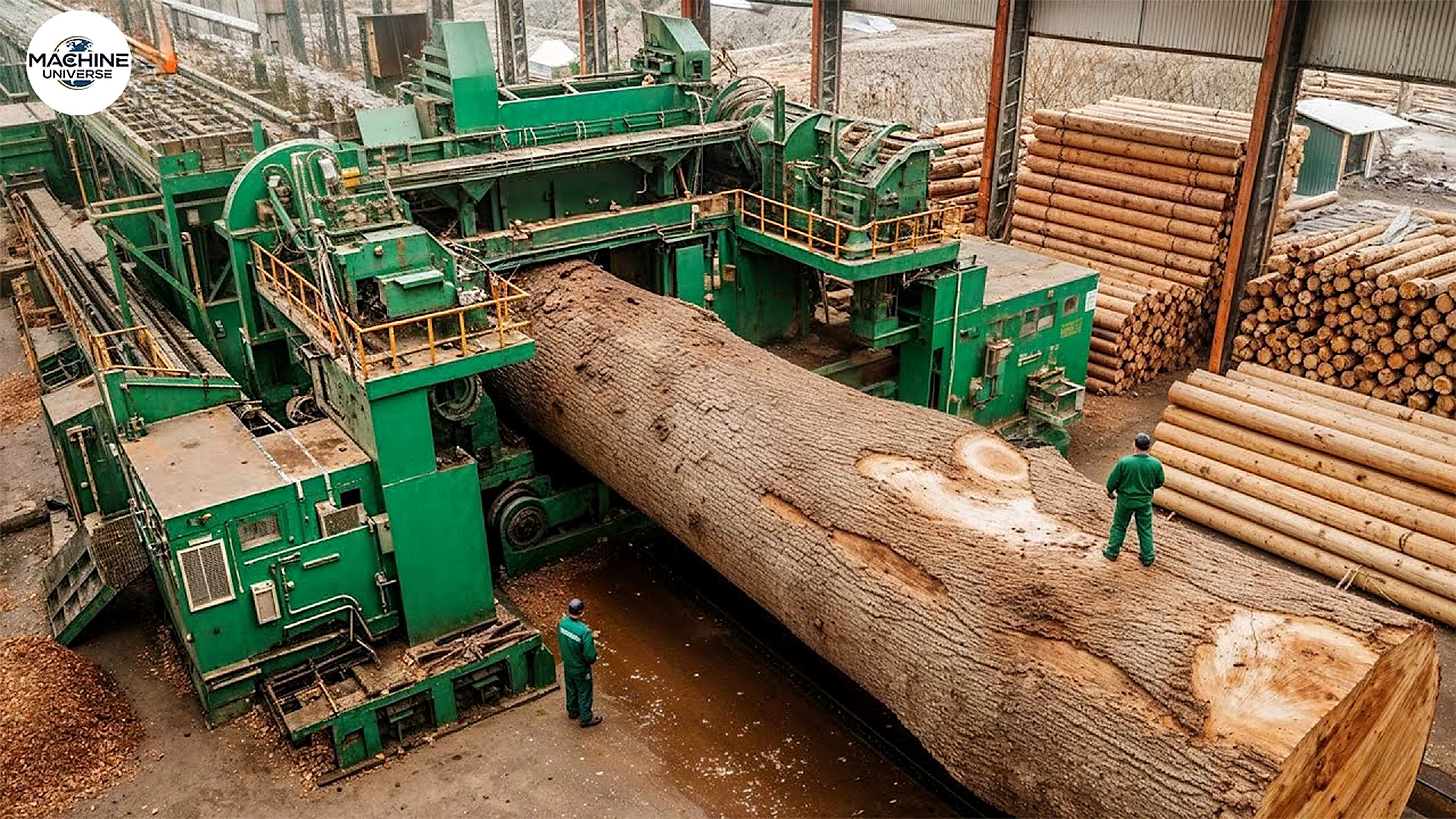
Super mill wood processing matters because it shows the whole industrial logic behind turning trees into boards. A viewer may first notice the conveyors, saws, scanners, and scale, but the real value is the sequence. Each log must be received, sorted, positioned, opened, cut, separated, and protected after the blade work is finished.
That sequence is useful even for people who do not own industrial equipment. A small woodworking shop, a portable sawmill operator, and a large facility all face the same basic question: how do you preserve the most value from an irregular natural material? The answer is never just speed. It is planning, support, accurate cuts, safe handling, and realistic expectations about drying.
The $500M phrase in the source title gives the video a strong hook, but the article should not depend on that number. Unless separate documentation confirms the exact investment, it is better to treat the figure as part of the source title and focus on the visible process. That makes the article more useful and safer for readers.
From Log Yard To Saw Line
The first stage of super mill wood processing happens before the main saw begins. Logs arrive with different diameters, tapers, sweep, bark condition, moisture, knots, cracks, and hidden defects. If those logs are not sorted well, the saw line must solve too many problems at once.
A strong log yard works like a staging area for decisions. Material is grouped, moved, and positioned so the cutting line can run with fewer interruptions. That does not mean every log becomes perfect lumber. It means the mill reduces avoidable waste by matching the log to a sensible path.
For Tecatool readers, this is one of the clearest lessons. Before any valuable cut, study the material. Look for the pith, the sweep, the knots, the cracks, the metal risk, and the final board size you actually need. Better cutting starts before the saw touches the wood.
How Scanning And Automation Protect Yield
Modern sawmills often use scanning and optimization to decide how a log should be opened. The machine can measure shape quickly, but the goal is familiar to any woodworker: find a cut plan that turns uneven timber into the most useful boards possible.
Automation protects yield by making repeated decisions more consistent. It can keep feed rate steady, move heavy material safely, and route boards through the next stage without constant manual repositioning. Still, wood is not a uniform material. Knots, internal stress, moisture, and grain direction mean human judgment remains important.
The best way to read an industrial mill video is to see automation as a decision tool, not as magic. A scanner may suggest a path, but the value still depends on blade condition, log support, sorting rules, drying practice, and final grading.
Board Recovery And Waste Control
Board recovery is the practical heart of sawmill economics. Every log contains several possible outcomes. One plan may create wider boards but more offcut. Another may create narrower boards with fewer defects. A third may sacrifice some width to protect stability and grade.
Good recovery does not mean forcing every inch into a board. It means making sound choices. A board full of defects, movement, or poor grain may not be valuable simply because it exists. Sometimes the better decision is to remove weak material, sort it into another use, or accept less volume for better quality.
Waste control also matters. Bark, slabs, chips, sawdust, and offcuts can become fuel, mulch, pulp, engineered products, or shop material depending on the facility. A good mill thinks about waste streams as part of the production system rather than treating them as an afterthought.
What Small Shops Can Learn
A small shop cannot copy the scale of a super mill, but it can copy the discipline. Before cutting a slab or log, decide the final use, mark defects, support the material, choose a safe tool path, and plan where the boards will go after the cut.
Another useful habit is separating excitement from evidence. A video title may mention a huge facility or a dramatic dollar amount, but the shop lesson comes from what can be seen: stable handling, careful feed, predictable sorting, safe work zones, and sensible storage.
This turns a big industrial video into a practical checklist. Inspect first. Cut with a plan. Protect the board after cutting. Keep airflow in mind. Do not call lumber finished until it is dry, flat enough, and graded for the work ahead.
Drying, Grading, And Storage
Fresh boards are not finished boards. They still contain moisture, and that moisture must leave the wood in a controlled way. If lumber dries too quickly on the surface, checking can appear. If it dries unevenly, boards can cup, twist, bow, or stain.
Drying is where many beautiful sawmill moments either become useful lumber or future problems. Stickers, airflow, shade, weight, end protection, and a level base all matter. Large facilities may use kilns and sensors, while small shops may use air drying and patience, but the physics are still the same.
Grading is the next filter. A board may look impressive on camera, but its final value depends on thickness, moisture, defect placement, strength, and intended use. The most honest woodworking coverage follows the material beyond the dramatic cut.
What Viewers Should Notice
When watching super mill wood processing, look at support points under the log, how the first reference face is created, how the log is rotated, and how boards move after leaving the saw. The finished board is shaped by every stage before it.
Also notice what the video does not prove. It may show scale and speed, but it may not prove exact cost, production volume, species mix, sustainability record, or final grade unless those details are documented. A good article should keep that boundary clear.
That boundary improves SEO as much as accuracy. Readers searching for practical information want more than an excited recap. They want a clear explanation of the process, the risks, the lessons, and the parts of the claim that still need verification.
It also helps the article stay useful over time. Even if the exact facility cost, output rate, or ownership details change later, the process lessons remain valuable because log handling, cut planning, drying discipline, and grade control are permanent sawmill fundamentals.
Final Tecatool Takeaway
Super mill wood processing is useful because it makes the full lumber chain visible. The machines are impressive, but the deeper lesson is coordination: log sorting, scanning, safe movement, accurate cutting, board recovery, drying, grading, and storage.
For Tecatool readers, the best takeaway is simple. Bigger machines do not remove the need for careful wood judgment. They only make good judgment more important because the process moves faster and the cost of mistakes can grow quickly.
Frequently Asked Questions
What is super mill wood processing?
Super mill wood processing is the industrial workflow that moves logs through sorting, scanning, saw lines, board recovery, drying, grading, and storage so trees can become usable lumber.
Is the $500M figure in the source video confirmed?
The figure appears in the source video title. This article treats it as a source claim unless separate documentation confirms the exact investment, valuation, or facility cost.
What can small woodworkers learn from a super mill?
Small woodworkers can copy the discipline: inspect the log, plan the cut, support the material, control waste, and protect boards during drying and storage.
Why does drying matter after sawmill cutting?
Fresh-sawn lumber still contains moisture. Without controlled drying, boards can cup, twist, stain, check, or lose the value created during cutting.
Super Mill Wood Processing Source Video
Sources: Machine Universe source video, Oregon State University Extension wood-processing guidance, and USDA Forest Service air-drying research.