
Amish barn raising without power tools is useful for Tecatool readers because it turns a dramatic video moment into practical workshop lessons. The source does not need viral view numbers to matter here; it is part of the channel workflow and it gives us a concrete process to analyze.
Source video: How the AMISH Build an Entire Barn in a Single Day With 300 People and No Power Tools, uploaded by Amish Insider on June 12, 2026. The article below treats numbers and big claims in the title or thumbnail as source claims unless another reliable source confirms them. The focus is the visible work: setup, tools, material handling, safety judgment, and what a craft or sawmill viewer can learn.
For related Tecatool context, see Inside Modern Sawmill Process How Logs Become Perfect Lumber and Large-Scale Timber Processing Turns Giant Logs Into Usable Wood.
Table of Contents
Why Barn Raising Fits Tecatool
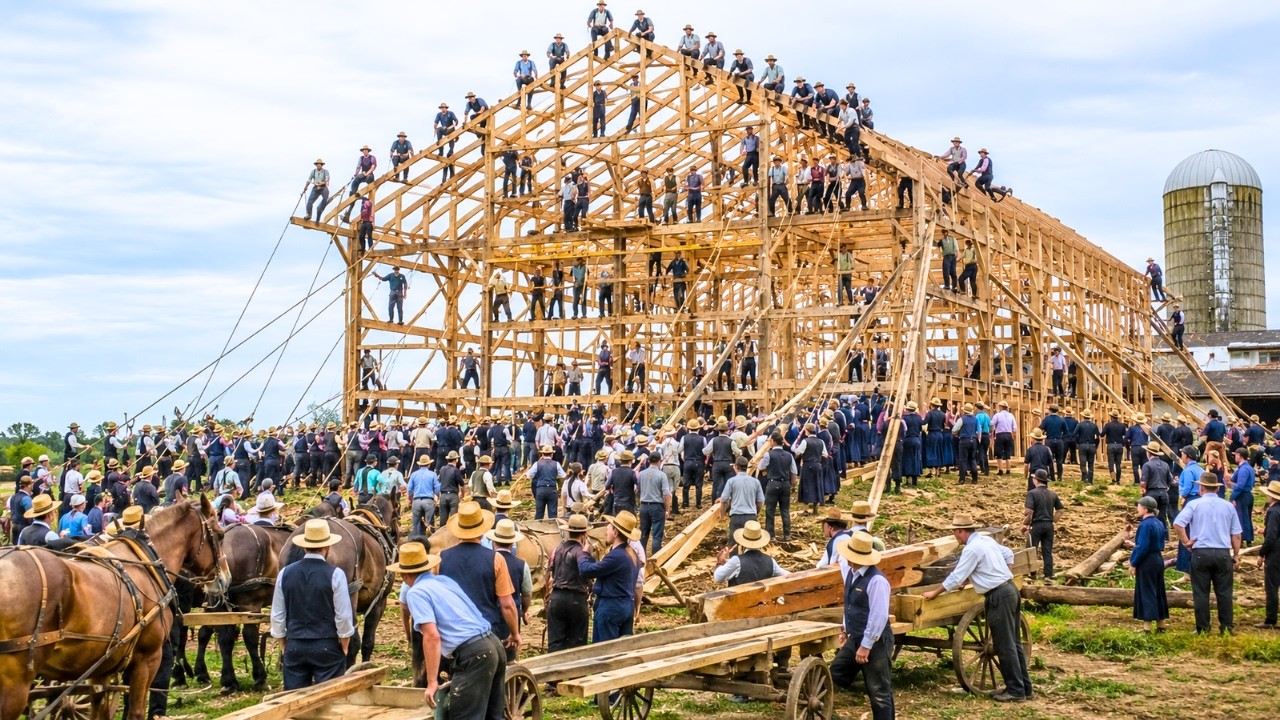
A barn raising is construction, but it is also large-scale woodworking. Posts, beams, braces, decking, fasteners, and layout all have to come together in the right order. The source title says 300 people work without power tools, and that claim should be treated as a source statement unless separately verified.
Even with that caution, the video is useful because it shows how a community build depends on preparation before the public work begins.
Planning Before The One-Day Build
No serious barn appears from nothing in a single day. Materials must be prepared, dimensions decided, joints planned, and work areas organized before the main crew arrives. The visible day is the assembly stage, not the entire project.
For Tecatool readers, that is the first lesson: speed on build day usually comes from planning earlier.
Hand Tools And Workflow
Working without power tools changes the rhythm. Cutting, lifting, fastening, and aligning all require more coordination. Hand tools can be efficient when the crew knows exactly what each station should do.
The absence of power tools also makes layout accuracy more important. A mistake that would be quick to recut with a machine may cost far more time by hand.
Crew Roles And Safety
A large crew can be powerful, but only if roles are clear. Some workers lift, some align, some fasten, some pass material, and others keep the area clear. Without organization, more people can create more risk.
Viewers should notice spacing, communication, and the order of assembly. The impressive part is not only the number of people; it is how the work avoids becoming chaotic.
What Modern Builders Can Learn
Modern builders may use different tools, but the lessons still apply. Prepare materials before assembly, keep paths clear, assign roles, and make sure each stage has a lead person who understands the sequence.
The video also reminds viewers that craft knowledge is social. A good crew passes skill from experienced builders to newer helpers through repeated work.
Amish Barn Raising Workflow
Amish barn raising is impressive because the visible build looks fast, but the workflow starts long before the frame goes up. Materials need to be prepared, dimensions checked, hardware or joinery organized, and the worksite cleared. The one-day assembly is the result of planning, not a substitute for it.
For Tecatool readers, the best lesson is sequencing. Large wooden structures depend on order. Posts, beams, braces, roof members, siding, and decking cannot be installed randomly. Each stage creates the reference for the next stage. When a crew understands that order, the work can move quickly without looking rushed.
The source title says 300 people build without power tools. That should be treated as the video’s claim unless separately verified, but the general concept remains valuable: a large coordinated crew can replace some machine speed with preparation, repetition, and clear roles.
Amish Barn Raising Without Power Tools
Working without power tools changes the cost of mistakes. A miscut board or poorly placed fastener can take longer to fix by hand. That makes layout and measuring more important. It also explains why experienced builders often spend so much time preparing before the most dramatic assembly begins.
Hand-tool work also changes the sound and pace of the site. Instead of one operator controlling a powered machine, many people share smaller tasks. Some workers carry, some hold, some align, some fasten, and some watch for safety. The build becomes a system of human coordination.
That coordination is not automatic. More people can help only when the work is organized. Without clear paths and roles, a crowd can slow the job or create hazards. The video is useful because it shows why leadership and staging matter as much as strength.
What Modern Crews Can Learn From Barn Raising
Modern crews may use saws, lifts, nailers, and layout lasers, but the same principles still apply. Prepare materials before the main work window. Keep the site clean. Assign roles. Make sure heavy lifts have a lead person. Confirm each stage before stacking more work on top of it.
Barn raising also reminds builders that knowledge lives in teams. A new helper can learn by watching how experienced workers carry timber, brace a frame, check alignment, and solve small problems before they become large ones. That kind of learning is difficult to capture in a tool manual.
The Tecatool takeaway is that traditional methods are not only nostalgia. They are a working example of planning, shared skill, and respect for material. Whether a builder uses power tools or not, the structure improves when the crew understands the sequence.
Final Tecatool Takeaway
The barn raising is valuable because it shows woodworking as a coordinated system. Tools matter, but planning, roles, sequencing, and disciplined teamwork are what make a one-day build possible.
The best way to read this video is not as a promise that every shop can copy the same result. It is a visual case study. When a crew controls the material, understands the tool path, and respects the limits of the work area, the process becomes clearer for everyone watching.
Timber Framing Lessons From Community Building
A barn raising is also a lesson in timber framing. Large wooden members need to meet cleanly, carry load, and stay aligned while the structure grows around them. If the first frame is out of square, later pieces inherit the problem. That is true whether a crew uses traditional tools or modern equipment.
The most impressive part is often the temporary support. During assembly, a structure may be strong in one direction and vulnerable in another. Bracing, sequencing, and careful lifting keep the frame stable until enough members are connected. That temporary logic is easy to overlook on video, but it is central to safe construction.
For Tecatool readers, the barn is a reminder that woodworking can become architecture. The same respect for square cuts, clean layout, and grain-aware material choice matters more when the object becomes a building.
Why Team Discipline Beats Speed Alone
Fast building is only impressive when it remains controlled. A crew that moves quickly without communication can create risk. A crew that moves with discipline can make difficult work look simple. That is the deeper lesson behind the source video.
Team discipline includes clear walkways, known leaders, prepared material piles, and workers who understand when to step in and when to stay clear. It also includes respect for fatigue. A one-day build can be exciting, but heavy timber still demands attention from start to finish.
Modern builders can borrow this mindset even with power tools. Plan the job, stage the materials, brief the crew, and keep the sequence visible. Good preparation makes speed safer.
Another lesson is material staging. When boards, beams, ladders, and fasteners are placed where the crew expects them, the build does not pause for searching or repositioning. That quiet preparation is one reason a traditional raising can look faster than a poorly organized modern job.
Even if a modern shop never builds a barn this way, the habit is useful: prepare the parts, keep the crew informed, and let the build sequence guide the pace instead of forcing speed.
Source Video
Frequently Asked Questions
Can a barn really be built in one day?
The visible raising and assembly can happen quickly when materials, plans, and crew roles are prepared in advance. The full project includes preparation before build day.
Why does working without power tools require more planning?
Hand-tool work can be efficient, but mistakes are slower to correct. Accurate layout, prepared materials, and clear roles become even more important.
What is the main lesson for modern builders?
The main lesson is coordination: clear staging, safe lifting, organized roles, and a build sequence that everyone understands.
Sources: source video, Oregon State University Extension wood processing guidance, and USDA Forest Service air-drying research.