
olive wood pipe carving is useful for Tecatool readers because it turns a dramatic video moment into practical workshop lessons. The source does not need viral view numbers to matter here; it is part of the channel workflow and it gives us a concrete process to analyze.
Source video: Woodworking: From Olive Trunk to Smoke!, uploaded by Mr. Taghavi on June 12, 2026. The article below treats numbers and big claims in the title or thumbnail as source claims unless another reliable source confirms them. The focus is the visible work: setup, tools, material handling, safety judgment, and what a craft or sawmill viewer can learn.
For related Tecatool context, see Inside Modern Sawmill Process How Logs Become Perfect Lumber and Large-Scale Timber Processing Turns Giant Logs Into Usable Wood.
Table of Contents
Why Olive Wood Is Interesting
Olive wood is prized by many makers because it can show strong grain contrast and dense, expressive figure. That beauty also makes it demanding. The craftsperson has to read the blank carefully before removing too much material.
In this source video, the object is a pipe. Tecatool’s angle is the woodworking process: trunk selection, carving control, surface refinement, and finishing decisions. The article does not encourage tobacco use or present the object as health-related.
From Raw Trunk To Workable Blank
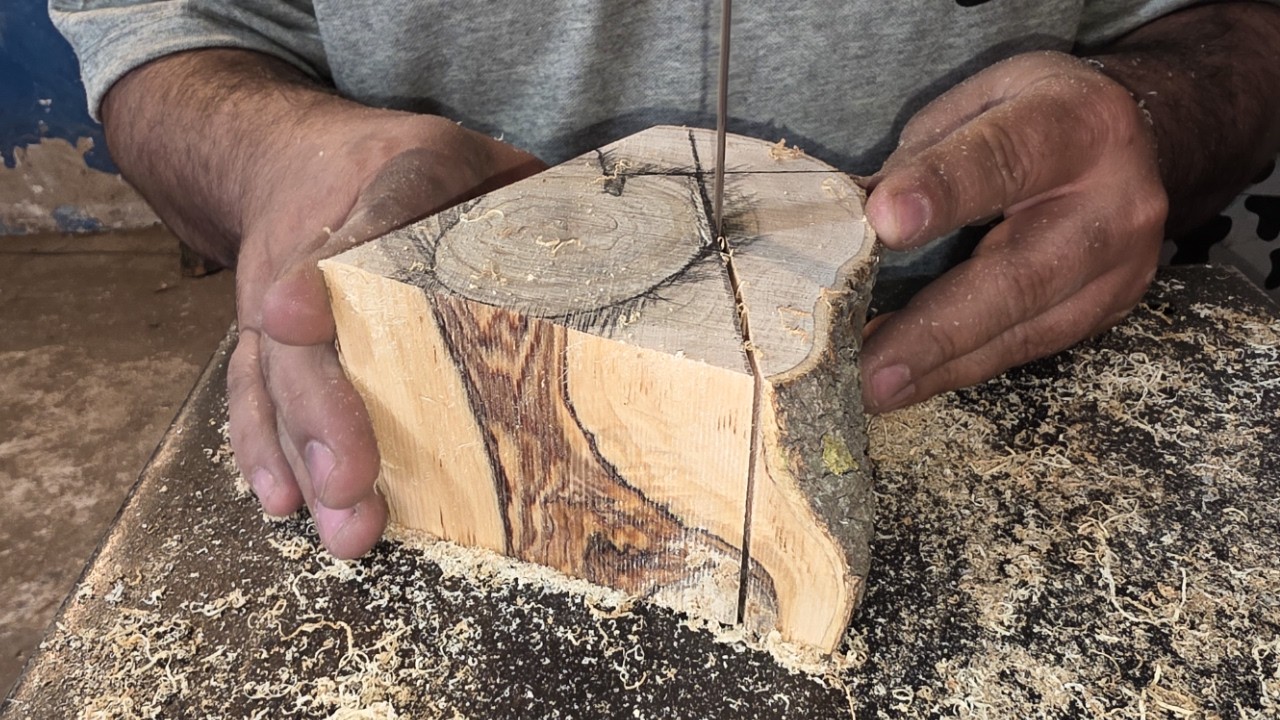
The first stage is turning an irregular trunk section into a workable blank. That means identifying cracks, pith, grain direction, and the part of the wood that can safely hold the final shape. Cutting too aggressively at this stage can waste the best figure.
Good small-object woodworking often begins with restraint. The maker keeps enough material for later shaping because curves, holes, and details all need margin.
Hand Shaping And Tool Control
Hand shaping is slower than machine production, but it gives the maker more feedback. Each pass of a tool reveals how the wood responds. Dense olive wood may reward patience, sharp edges, and small corrections instead of heavy cuts.
For viewers, this is the part to study: the angle of the tool, how the object is held, and how the maker avoids tearing across difficult grain.
Sanding And Surface Quality
After the shape is established, surface quality becomes the story. Sanding is not just polishing; it removes tool marks, softens transitions, and prepares the wood to show its figure under finish. Rushing this stage can leave scratches that become more visible later.
Small handcrafted objects make every surface mistake easy to see, so the final feel matters as much as the outline.
Responsible Tecatool Angle
Because the final object is a pipe, the safest Tecatool framing is craft, material, and handwork. The article can discuss carving, olive wood grain, and finishing while avoiding language that promotes smoking or makes health claims.
That lets readers learn from the woodworking process without confusing the craft analysis with lifestyle advice.
Olive Wood Pipe Carving Process
The olive wood pipe carving process begins with a difficult material choice. Olive wood can be dense, expressive, and visually rich, but a trunk section is not a ready-made craft blank. The maker has to find a stable portion of the wood and avoid weak areas before the object can take shape.
For Tecatool, the value is in the handwork. The video shows a craft object, but the article should stay focused on woodworking: marking, cutting, shaping, sanding, and finishing. That keeps the piece useful for readers interested in material transformation without promoting smoking or making lifestyle claims.
A small carved object leaves very little room for error. A bad cut can remove a curve that cannot be replaced. A hidden crack can change the design. That is why careful makers often work gradually, letting the grain and the blank guide the final shape.
Olive Wood Pipe Carving Tool Control
Tool control is the difference between carving and simply removing wood. Dense olive wood rewards sharp tools and controlled pressure. If the maker pushes too hard across difficult grain, tear-out can damage the surface. If the maker removes too little, the shaping stage becomes slow and uneven.
The best viewing habit is to watch the direction of each cut. Good handwork usually follows the material. The maker changes angle, rotates the object, and checks the surface repeatedly. Those small adjustments are easy to miss, but they are where much of the skill lives.
Holding the workpiece is also part of tool control. A small object must be secure enough for accuracy but not crushed or marked by clamps. The craftsperson often has to balance grip, access, and visibility at the same time.
Finishing Olive Wood With Care
Finishing starts before any finish is applied. Sanding has to remove tool marks while preserving crisp transitions. On a small object, rounded edges can look intentional or careless depending on how evenly they are handled. The maker has to decide where a surface should be soft and where a line should remain defined.
Olive wood’s grain can become more dramatic under finish, but finish can also reveal scratches that were invisible during rough shaping. That makes patience important. Moving through sanding grits too quickly can leave marks that distract from the wood’s natural figure.
The responsible article angle is simple: this is a woodworking study. Readers can learn about material selection, hand shaping, and surface quality without treating the final object as advice about use. The craft can be discussed separately from any smoking behavior.
Final Tecatool Takeaway
The useful lesson is the craft sequence: choosing a stable olive wood blank, shaping slowly, respecting grain direction, and finishing the object without turning the article into smoking promotion.
The best way to read this video is not as a promise that every shop can copy the same result. It is a visual case study. When a crew controls the material, understands the tool path, and respects the limits of the work area, the process becomes clearer for everyone watching.
Grain Direction And Design Choice
Small-object carving depends on matching the design to the grain. If the curve of the object fights the wood, the maker may run into tear-out, weak edges, or a surface that refuses to finish cleanly. When the design follows the blank, the finished object often feels more natural.
Olive wood can show dramatic lines, but those lines are not only decoration. They reveal how the material grew and how it may respond under tools. The craftsperson has to decide which face should be most visible, where the strongest section sits, and how to avoid placing delicate details across unstable grain.
This is where a handmade piece differs from mass production. The maker is not only executing a fixed plan. The maker is negotiating with one specific piece of wood.
Responsible Writing About Crafted Pipes
Because the object is a pipe, Tecatool should write with restraint. The article can admire the carving, surface quality, and transformation from trunk to finished object, but it should avoid language that glamorizes use. That is both safer and more useful for a woodworking audience.
A responsible craft article can still be detailed. It can discuss how the blank is selected, how the form is roughed out, how sanding changes the surface, and why finish choice matters. It can also explain that some objects require extra caution because their cultural or practical use may not be appropriate for every reader.
The result is a cleaner editorial angle: study the handwork, respect the material, and keep the article centered on craft.
Another important point is dust and cleanup. Small carving work can create fine dust, especially during sanding, so a clean bench, eye protection, and sensible dust control matter. Even when the video focuses on artistry, the workshop lesson includes keeping the work area organized and breathable.
For readers who make small objects, the larger lesson is repeatable: choose the blank carefully, remove waste slowly, check the profile often, and let the surface tell you when to change tools. That patient rhythm is what turns a rough trunk section into a finished handcrafted form.
That extra patience is often what separates a rough souvenir from a careful piece of small-scale woodworking.
Source Video
Frequently Asked Questions
Is this article promoting smoking?
No. The focus is woodworking technique, olive wood shaping, tool control, sanding, and finishing. It does not encourage tobacco use.
Why is olive wood used for small craft objects?
Olive wood can have dense structure and striking grain, which makes it attractive for carved objects when properly dried and worked.
What is the hardest part of carving a small object from trunk wood?
The hardest part is usually reading the grain, avoiding cracks or weak zones, and keeping enough material for final shaping and sanding.
Sources: source video, Oregon State University Extension wood processing guidance, and USDA Forest Service air-drying research.