
Advanced sawmill precision is the practical difference between a log that merely gets opened and lumber that keeps value after cutting, stacking, drying, and planing. The source video shows clean machine work, but the stronger Tecatool angle is the full workflow behind those clean passes: log reading, support, blade control, feed speed, board thickness, airflow, and final use.
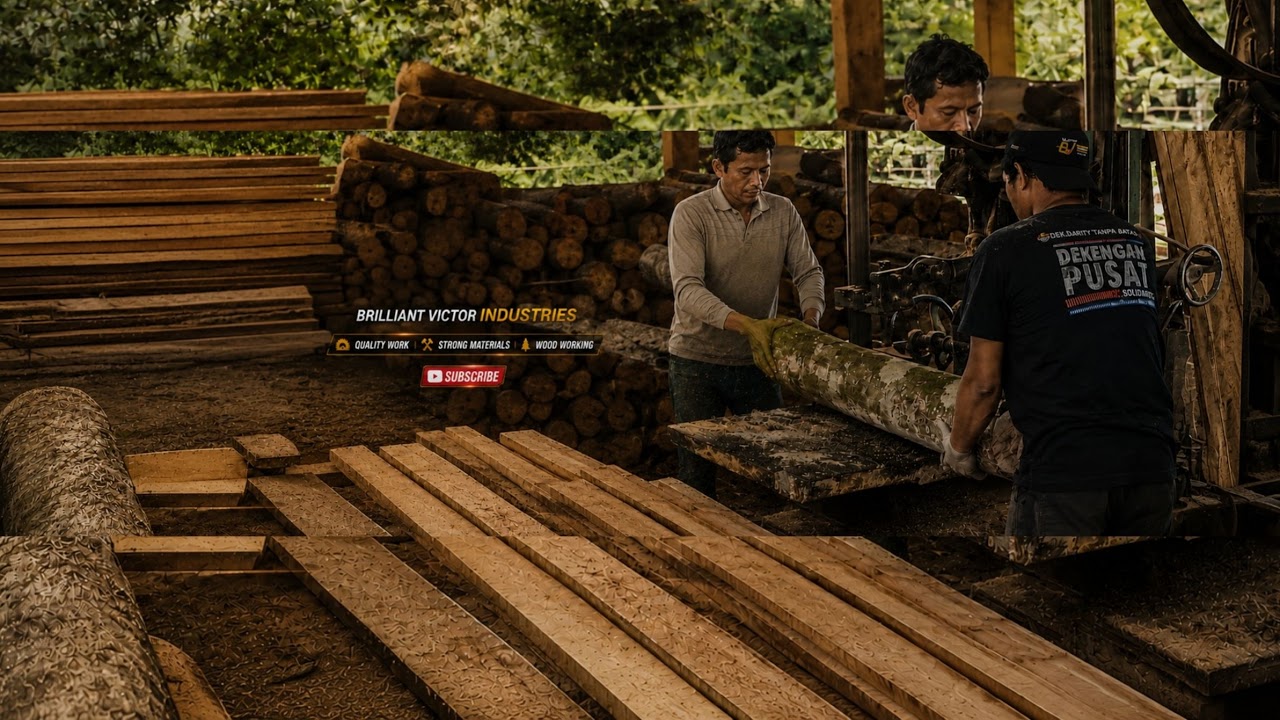
This article uses the source video Advanced Sawmill Cuts Logs with Unreal Precision as the visual starting point, then checks the process against practical wood-processing guidance from Oregon State University Extension, Clemson Land-Grant Press, and USDA Forest Service research. For related Tecatool context, see Inside Modern Sawmill Process How Logs Become Perfect Lumber and Large-Scale Timber Processing Turns Giant Logs Into Usable Wood.
For search intent, this guide explains advanced sawmill precision through 7 clean checks: setup, first face, blade control, feed rate, board thickness, stacking, and drying.
Table of Contents
Advanced Sawmill Precision Starts Before The Blade
Advanced sawmill precision starts before the blade touches the log. The operator first has to read the timber, check the sweep, watch for cracks, decide where the first face should be opened, and make sure the log is supported well enough that it will not roll or twist during the pass. A machine can cut straight only when the setup gives it a stable reference.
That setup stage is easy to miss in a fast video because the clean cut is more dramatic than the preparation. In real production, however, the first decision often decides the value of every board after it. A rushed first face can create waste, force extra planing, or turn wide potential boards into narrow recovery cuts.
The practical lesson for Tecatool readers is simple: do not judge a sawmill only by motor power or blade size. Look at how the log is positioned, how the clamps hold it, and how calmly the operator approaches the opening cut. Precision is a sequence, not one spectacular moment.
How Log Positioning Changes Board Quality
Log positioning changes board quality because timber is rarely symmetrical. One side may carry more knots, tension, rot, metal risk, or grain movement than the other. A skilled sawyer chooses the first cut to expose useful wood while keeping enough material for later faces. That choice affects grain appearance, board width, and the amount of usable lumber recovered from the log.
When the first reference face is clean, the operator can rotate the log into a cant, open wider slabs, or make repeated dimensional cuts with more confidence. If the log rests unevenly, the blade may still move forward, but the board can leave the mill with uneven thickness or surface waves that cost time later.
This is why advanced sawmill precision is also a material-reading skill. The sawmill provides repeatable motion, but the operator decides how to turn an irregular tree into stock that a shop can actually use. Good positioning reduces correction work before that correction is needed.
Blade Control, Feed Rate, And Surface Quality
Blade control depends on sharpness, tension, feed rate, heat, and tooth condition. A blade that is pushed too hard can wander, leave washboard marks, or heat the cut. A blade that is dull can make the machine look powerful while quietly damaging the value of the lumber. Clean footage should therefore be read as evidence of control, not only speed.
Feed rate matters because wood changes inside the same log. Dense grain, knots, moisture pockets, and tension wood can all change how the blade behaves. A steady operator listens to the machine and adjusts instead of forcing every pass at the same pace. That is especially important when the goal is boards that need less planing after drying.
Surface quality is money. Every extra pass through a planer removes material. If a rough sawmill cut costs an eighth of an inch during cleanup, the buyer loses thickness and the shop loses options. Advanced sawmill precision protects that margin by creating a straighter, cleaner board from the start.
Why Board Thickness Must Plan For Drying
Fresh-sawn lumber is not finished lumber. It still contains moisture, and as that moisture leaves, the board can shrink, cup, twist, bow, or check. A good sawyer plans board thickness with that movement in mind. Cutting exactly to final size while the board is green can leave too little material for flattening after drying.
That is why many shops leave extra thickness in fresh boards. The allowance gives the woodworker room to joint, plane, and correct movement after the board reaches a usable moisture range. Thin boards may dry faster, but they can also punish poor stacking. Thick slabs can hold dramatic value, but only if the drying plan respects their size.
Oregon State Extension and USDA drying research both point toward the same practical idea: cutting is only the first stage of lumber quality. Moisture movement keeps working long after the blade stops. The cleanest sawmill pass can still become a warped board if drying is treated as an afterthought.
Stacking, Stickers, And Airflow Protect The Cut
Stacking is where many good cuts are protected or ruined. Stickers, the narrow strips placed between layers of boards, create air channels so moisture can leave more evenly. Clemson guidance on portable sawmill stickers explains why sticker spacing, thickness, and alignment matter: the stack should carry weight vertically and let air move through the lumber.
If stickers are random, too far apart, or not aligned from layer to layer, boards can sag, stain, or dry unevenly. If the base is not level, the entire stack follows that problem. If airflow is blocked, the outside of a board can dry differently from the inside, raising the risk of checking and distortion.
That means advanced sawmill precision does not end at the mill bed. The process continues through handling, stacking, covering, airflow, and patience. For buyers, this is often the hidden difference between lumber that looks impressive on day one and lumber that remains useful months later.
What Buyers And Woodworkers Should Check
Buyers and woodworkers should check more than the beauty of the fresh face. Ask whether the boards are consistent in thickness, whether the grain pattern matches the final use, whether defects were cut around intelligently, and whether the lumber was stacked with aligned stickers. These questions turn a sawmill video into a real inspection habit.
Also check whether the source shows the full process or only the most satisfying cut. A video can be visually honest while still leaving out moisture readings, species details, drying time, or final flattening. A responsible article should not invent those missing details. It should explain what can be observed and what remains unknown.
For small shops, the best takeaway is workflow discipline. A good sawmill setup reduces waste, a good blade reduces correction work, and a good stack protects the value created by the cut. Those three stages are connected, and weak performance in one stage can erase the gains made in another.
Final Tecatool Takeaway
Advanced sawmill precision is not a single trick. It is a chain of decisions that begins with reading the log and ends with stable, usable boards. The source video gives a strong visual example of accurate cutting, but the deeper value is in the system around the cut: support, blade condition, feed control, thickness planning, stacking, stickers, airflow, and drying.
That is the lesson Tecatool readers can actually use. A powerful machine can open a log quickly, but only a controlled workflow turns that log into lumber that keeps its value. The blade creates the board; the process protects it.
Frequently Asked Questions
What is advanced sawmill precision?
Advanced sawmill precision is the combined control of log setup, blade condition, feed rate, board thickness, and drying preparation so the final lumber stays straighter and more useful.
Why does a clean sawmill cut still need careful drying?
A clean cut does not remove moisture from the board. Fresh lumber can still shrink, cup, twist, or check, so stacking, stickers, airflow, and drying time remain essential.
What should buyers look for after sawmill cutting?
Buyers should look for consistent thickness, clean faces, smart defect handling, aligned stickers, a level stack, airflow, and enough extra thickness for final planing.
Sources: source sawmill video, Oregon State University Extension, Clemson Land-Grant Press, and USDA Forest Service Research and Development.
Maintenance Checks Before Each Sawmill Session
Advanced sawmill precision also depends on small maintenance checks before the first log reaches the bed. The operator should inspect blade sharpness, tooth damage, guides, tension, lubrication, guards, stops, clamps, and the scale used for board thickness. These checks are not decoration. They decide whether the mill repeats the same cut or slowly drifts away from the target dimension.
Another useful check is the waste path. Sawdust buildup can hide support problems, make measurements harder to read, and increase friction around moving parts. A clean bed and visible scale help the operator notice problems early. When a board leaves the cut with an uneven surface, the cause may be in the setup rather than in the log itself.
For Tecatool readers, the best habit is to treat maintenance as part of accuracy. A sharp blade, stable clamp, clear scale, and clean work zone give the sawyer more control before the machine does the heavy work. That is how advanced sawmill precision becomes repeatable instead of lucky.
How Sawmill Precision Affects Shop Costs
Better sawmill precision affects shop costs because every uneven board creates extra work later. More planing means more time, more dust, more blade wear, and less final thickness. Poor stacking can add another cost by turning straight fresh boards into twisted stock that must be trimmed or rejected.
A careful cut does not make drying optional, but it gives the shop a better starting point. The lumber buyer gets more usable material, the maker gets more predictable boards, and the final project has a better chance of keeping its shape. That is why clean log cuts matter beyond the visual satisfaction of the sawmill video.