
A free pallet cabin sounds like a shortcut until the build starts showing every hidden decision behind it. In this Tecatool recap, the useful part is not just that a father and son turn discarded pallet wood into a small forest shelter. The useful part is how the project moves from a pile of reclaimed boards into a weather-tight cabin with a raised base, taller walls, a proper roof, a porch, windows, a door, a loft, and a compact interior layout.
The source video follows Man Builds Tiny Cabin using FREE Pallets in the Forest, uploaded by Makerium and credited in the description to This Life Outdoors. The build is framed as an off-grid woodland retreat for camping, hunting, shared outdoor trips, and family memories. For Tecatool readers, that makes it a strong case study in reclaimed material use, field carpentry, budget control, and the difference between a clever idea and a structure that can actually be used.
Related Tecatool reading: Woodworking.
Table of Contents
Table of ContentsWhat The Free Pallet Cabin Video Shows
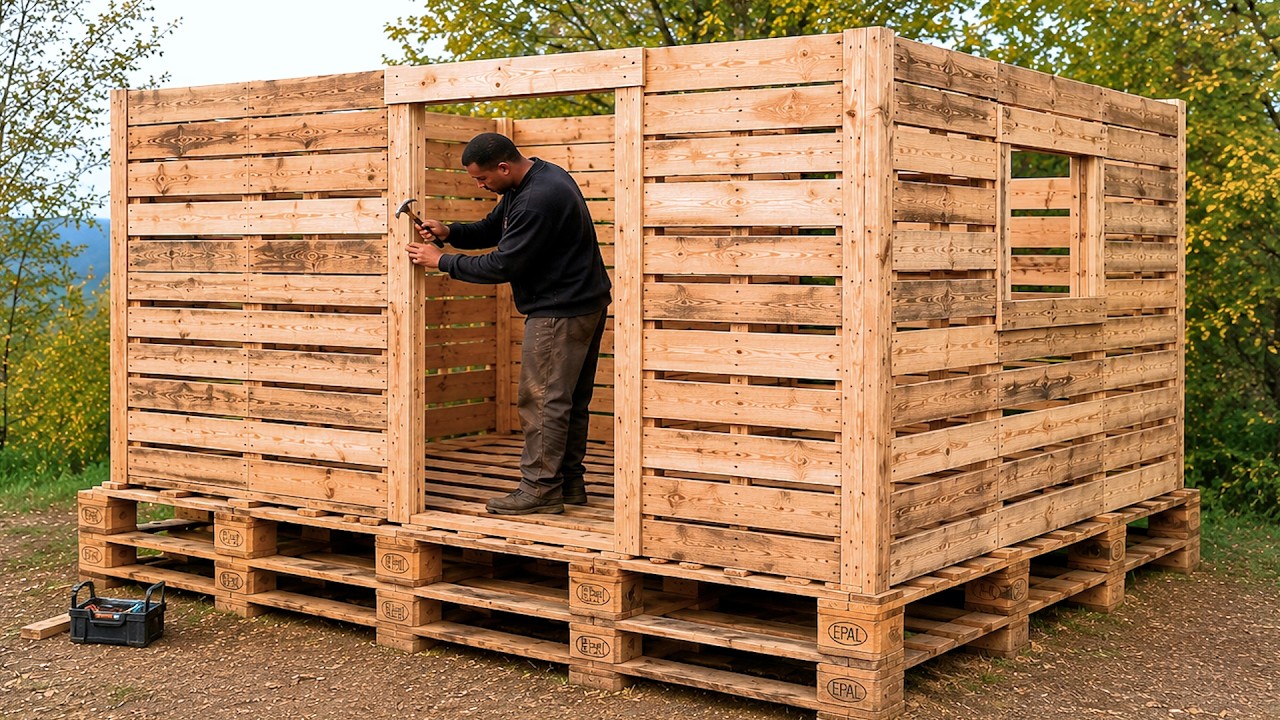
The project begins with a simple constraint: build a livable shelter in the woods using mostly free pallet wood. The pallets are large, roughly five feet by twelve feet according to the narration, so they do more than provide material. They also influence the footprint of the cabin. That is one of the first real lessons in the video. Reclaimed material is not only cheap stock; it becomes a design limit that the builder has to respect.
Instead of pouring a complex foundation, the builders use concrete blocks with treated 4x4s to create a practical raised base. That choice fits the scale of the project. It keeps the structure off the ground, gives the floor a defined support system, and lets the work move forward without turning a budget cabin into a full conventional house build. The flooring goes down quickly because the pallet dimensions work with the cabin layout.
The walls are started with tar paper as a protective layer before pallet boards are added. This is a small but important detail. A pallet wall can look solid from a distance while still leaving cracks, light gaps, and draft paths. Tar paper helps create a secondary barrier before the rustic siding takes over the visual job.
Once the walls stand, the cabin begins to read as a building rather than a stack of reused material. The source also shows the kind of ordinary problem that makes or breaks a project like this: small gaps around corners and joints. Spray foam is used to close those areas, improving comfort and reducing obvious entry points for wind and insects. It is not glamorous, but these are the details that decide whether a cabin feels usable when the camera is off.
Why The Wall Height Fix Matters
The biggest correction in the build is the wall height. The original pallet walls are too short for comfortable use, standing around 5 feet 3 inches. That might be acceptable for a quick shed, but it is awkward for a cabin where people are expected to stand, move, enter through a standard door, and use the space repeatedly.
The builders solve it by adding a knee wall section above the pallet walls. That raises the wall height to about seven feet and changes the entire feel of the structure. This is the moment where the project stops being a novelty and starts becoming a practical shelter. It gives the interior more headroom, makes the cabin feel less cramped, and allows normal door installation without forcing odd compromises.
For anyone planning a reclaimed build, this is the key planning point. Free material is useful only when it does not trap the whole project inside bad dimensions. Pallets, salvaged fence boards, old beams, and leftover roofing can all save money, but the builder still has to protect the human scale of the finished space. Door height, sleeping clearance, walking paths, roof pitch, and ventilation all matter.
The front wall and double top plate then tie the structure together. A double top plate is not the most photogenic part of a cabin, but it adds rigidity and helps connect wall sections into a more stable frame. In a build made from mixed reclaimed material, that kind of continuous structural tying is especially important because not every board begins with the same quality, straightness, or history.
Roof, Porch, And Weatherproofing
The roof is where the project becomes more conservative, and that is a good sign. The source explains that the rafters and roof sheathing are purchased rather than reclaimed. That decision protects the cabin where failure would be most expensive. Reclaimed material may be fine for rustic interior boards or wall cladding, but the roof has to carry load, shed water, and survive weather changes.
A ridge beam is set in place to define the roof structure. Rafters establish the pitch and give the cabin overhead volume. Sheathing closes the roof plane. The builders wanted 5/8 inch boards but used available 7/16 inch sheathing instead. That is a common field-build compromise: the perfect material is not always nearby, so the builder has to decide whether a substitute is acceptable for the use case.
Tar paper is carried onto the walls and roof to add moisture protection. Shingles are then installed from the lower edge upward so each row overlaps the one below it. The basic principle is simple: water must always be given a path away from the building. If any layer lets water travel backward into the structure, the cabin will age badly no matter how good the reveal looks.
The porch is one of the smartest uses of an existing condition. The ridge beam extends past the cabin, so instead of cutting it back, the builders use it as the start of a covered entry. A pallet is worked into the porch framing, roof boards are carried forward, and shingles tie the extension into the main roof. Underfoot, the porch surface is reinforced with boards set perpendicular to the pallet surface, making it more stable for regular walking.
Interior Layout, Loft, And Bathroom
Once the shell is closed in with windows and a door, the project shifts from shelter to living layout. The windows are presented as a low-cost find, and the door is bought for around $80. Those details matter because they show a realistic balance: use reclaimed material where it makes sense, but spend money when a component needs reliability, fit, or weather sealing.
The loft is built from boards and components taken from disassembled pallets. This is a strong use of reclaimed wood because the loft adds sleeping capacity without expanding the footprint. The narration suggests it can support several sleepers, turning the small cabin into a shared hunting or camping base rather than a one-person hut.
Under part of the loft, the builders frame a small bathroom. Even a compact enclosed room changes how useful the cabin feels. It organizes the interior, creates privacy, and makes the building easier to use during longer stays. A window helps the small space feel brighter and less sealed off.
The interior walls are finished with reclaimed wood from an old stockade fence. This is where mismatched material becomes a strength. Different board colors, weathered marks, and uneven tones give the cabin character. The goal is not a showroom finish. The goal is a warm, rustic base camp that feels honest to the way it was built.
Practical Lessons For Reclaimed Wood Builds
The first lesson is to let salvaged material guide the design without letting it control every decision. The pallet dimensions shape the floor and wall strategy, but the builders still correct the height when the first version is too low. That flexibility is essential.
The second lesson is to spend money where failure hurts. Purchased rafters, roof sheathing, windows, and a door may not fit the fantasy of a completely free cabin, but they make the finished structure more practical. A low-budget build does not have to mean a fragile build.
The third lesson is to seal the boring gaps. Tar paper, spray foam, overlapping shingles, reinforced porch decking, and wall ties are not viral moments, but they are the difference between a prop and a usable shelter.
The fourth lesson is to design around real bodies. Headroom, standard door height, loft access, bathroom privacy, and porch footing all affect how people move through the space. A cabin is successful only if it works after the final shot.
Safety And Durability Notes
Anyone inspired by a pallet cabin should inspect material carefully. Pallets can be cracked, contaminated, uneven, or treated in ways that are not ideal for interior use. Boards should be checked for rot, fasteners, split ends, and hidden metal before cutting or installing.
Structural decisions also need local judgment. A small cabin in a forest still has to handle wind, moisture, snow or rain loads, ground movement, insects, and long-term wood movement. Concrete blocks and treated supports may be appropriate in one setting and insufficient in another. Local codes and land rules should be checked before copying the idea.
From a tool safety standpoint, reclaimed wood demands patience. Hidden nails and screws can damage blades or cause dangerous kickback. Eye protection, hearing protection, gloves where appropriate, stable supports, and careful demolition are not optional details.
Final Tecatool Takeaway
This free pallet cabin works as a story because it is not built from one trick. It succeeds through a chain of practical corrections: raise the wall height, tie the frame together, buy dependable roof material, seal the gaps, reinforce the porch, and turn the inside into a real sleeping space.
The headline promise is free pallets. The real lesson is better: low-cost building still needs structure, weather logic, and a willingness to change the plan when the first version is not good enough.
Frequently Asked Questions
Can a cabin really be built from free pallets?
Yes, pallets can provide useful material, but the builder still needs a sound base, safe framing decisions, weather protection, and careful inspection of every reclaimed board.
What is the most important fix in this build?
The wall height correction is the biggest turning point because it changes the cabin from a cramped pallet shell into a space that can use standard doors and feel comfortable inside.
Source: https://www.youtube.com/watch?v=1WrGOkYCLus