
This 1994 Challenger logging truck video works because the biggest lesson is not horsepower. It is control. The Road Rail Marine episode puts viewers in the cab with David Lornie at Eve River log sort on Vancouver Island, where a massive cedar load depends on brake water, preload hydraulics, air pressure, latch checks, careful loading, and downhill discipline.
For Tecatool, the useful angle is heavy equipment as a complete operating system. The Detroit Diesel Series 60 matters. So does the Allison transmission with retarder, the PTO, the preload trailer, the Clark axles, the loader attachment, and the driver’s routine before the truck ever points downhill.
Related Tecatool reading: Woodworking.
Why The Challenger Video Stands Out
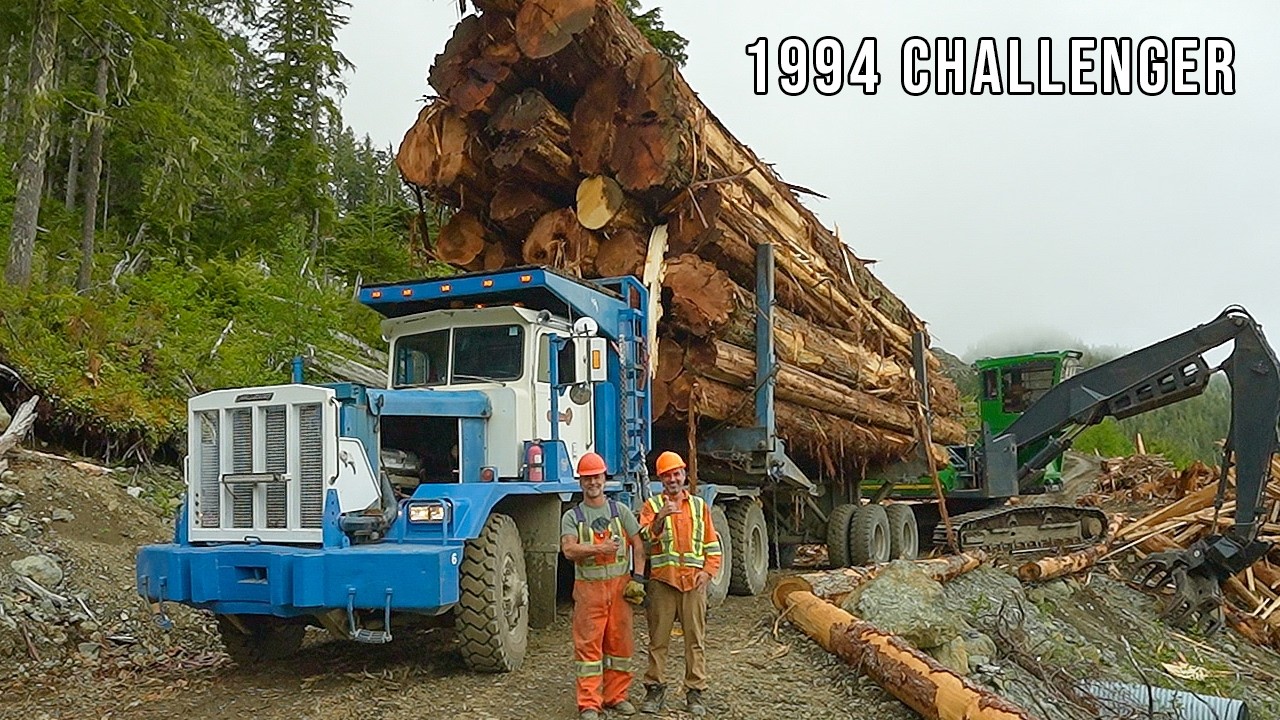
The episode is specific: June 2026, Eve River log sort, east side of Vancouver Island, and a 1994 Challenger off-highway logging truck. That specificity is what the old title missed. This is not a generic “lessons” post. It is a working-machine recap with a real route, real terrain, and a driver explaining why each routine matters.
The truck is described as a Port Alberni-built Challenger in its original blue and white Pacific Forest Products paint scheme. A nearby Pacific P16, a John Deere loader, and a T-Mar Industries power clamp place the scene firmly inside coastal logging equipment culture.
Brake Water Comes Before Horsepower
The first serious lesson is water. The driver explains that they stop for water every load because the route has a lot of downhill running. Forgetting water can mean brake fire, brake loss, and damaged equipment. That is the practical center of the episode.
Heavy hauling is heat management. Power gets the truck moving, but brake water, retarder use, gear control, and conservative speed keep the load from becoming a runaway problem. The refill routine looks simple, but it is the kind of habit that protects the truck and everyone around it.
Preload Setup Is A System
The preload operation shows several layers working together. The truck is in neutral, the electric PTO engages the hydraulic system, trailer brakes are released, air pressure builds, the truck brakes stay applied, and the activator lever lowers the trailer. The driver also uses steer brakes to hold position.
Then come the quiet checks: latch pins, cables, latch position, and the separation from the tractor. Those details are easy to miss in a video built around a huge machine, but they are what keep a preload setup from becoming messy or dangerous.
What The Machine Specs Really Mean
The Detroit Diesel Series 60 is rated at 575 horsepower in the source. That number is impressive, but the drivetrain tells the fuller story. The Allison 6061 transmission, retarder, manual lockup switch, PTO, and Clark 121,000 lb axles with planetary wheel hubs all point to controlled force rather than showmanship.
The cedar load also has a paperwork side. The crew stamps all four corners and adds paint so scalers can identify where the load came from. Logging is not only cutting and hauling timber; it is tracking, sorting, scaling, and moving valuable material through a system.
Tecatool Takeaway
The hook is the massive cedar load. The reason the video is useful is the routine around it. Fill the brake water, set up the preload trailer correctly, inspect the pins and cables, let the loader do controlled work, mark the load, then drive the grade with heat and speed in mind.
That is the real Tecatool angle: big machinery is impressive when it is loud, but it is trustworthy only when the operator respects the systems that make it controllable.
Frequently Asked Questions
Why does the truck need brake water?
The source explains that the route includes significant downhill travel, so brake heat management is critical for safety and equipment protection.
What makes this Challenger notable?
It is an off-highway preload logging truck with a Detroit Series 60, Allison transmission with retarder, PTO hydraulics, heavy Clark axles, and a working cedar load in coastal BC.
Source: https://www.youtube.com/watch?v=LoWO7WLZluk