
dead coconut palm wood furniture process is the practical question behind this Woodworking Craftsman source video: how can a dead coconut trunk move from rough, fibrous material to a usable furniture part without pretending the video proves exact age, price, species grade, or shop formula. The useful answer is a sequence: inspect, open, sort, dry, stabilize, join, shape, sand, and finish.
The source title promises a dramatic conversion from dead coconut trees into a luxury result. Tecatool reads it as a workshop case study. Coconut palm is not a normal hardwood log with annual rings like oak or walnut. It is a palm stem with dense outer fibers, softer interior zones, and a structure that can punish careless cutting. That makes the process more useful than the headline, because the value depends on how the maker separates sound material from risky material.
This dead coconut palm wood furniture process article uses the exact source video, the five extracted frames, and the visible process order as evidence. Where the video does not show moisture content, adhesive type, exact tool settings, sale price, or final customer use, those facts are left unclaimed. The goal is to help readers understand what to look for when a workshop tries to turn salvaged coconut palm into furniture stock.
For wider process comparison, see the Tecatool woodworking archive. This page stays focused on coconut palm material handling, machine sequence, joinery risk, and finish checks from the source video.
Table of Contents
Dead Coconut Palm Wood Furniture Process Source Evidence
The video begins as a salvage story. The important detail is not simply that a dead tree is reused. The important detail is that the maker must discover whether the trunk still contains sections that can become furniture parts. Dead palm can hide rot, soft core, discoloration, insect damage, and uneven fiber density. A good first read asks where the hard outer material is, where the weak interior starts, and whether the pieces can be cut into boards, panels, rails, or decorative faces.
That is why the early setup matters. Before the shop can talk about beauty, it has to control the workpiece. The material must be supported so the cut does not wander, pinch, tear, or expose a section too fragile to use. The source frame below is valuable because it shows the context before the main transformation is judged. A viewer can start asking whether the material is being treated like ordinary lumber or like an irregular salvage blank.
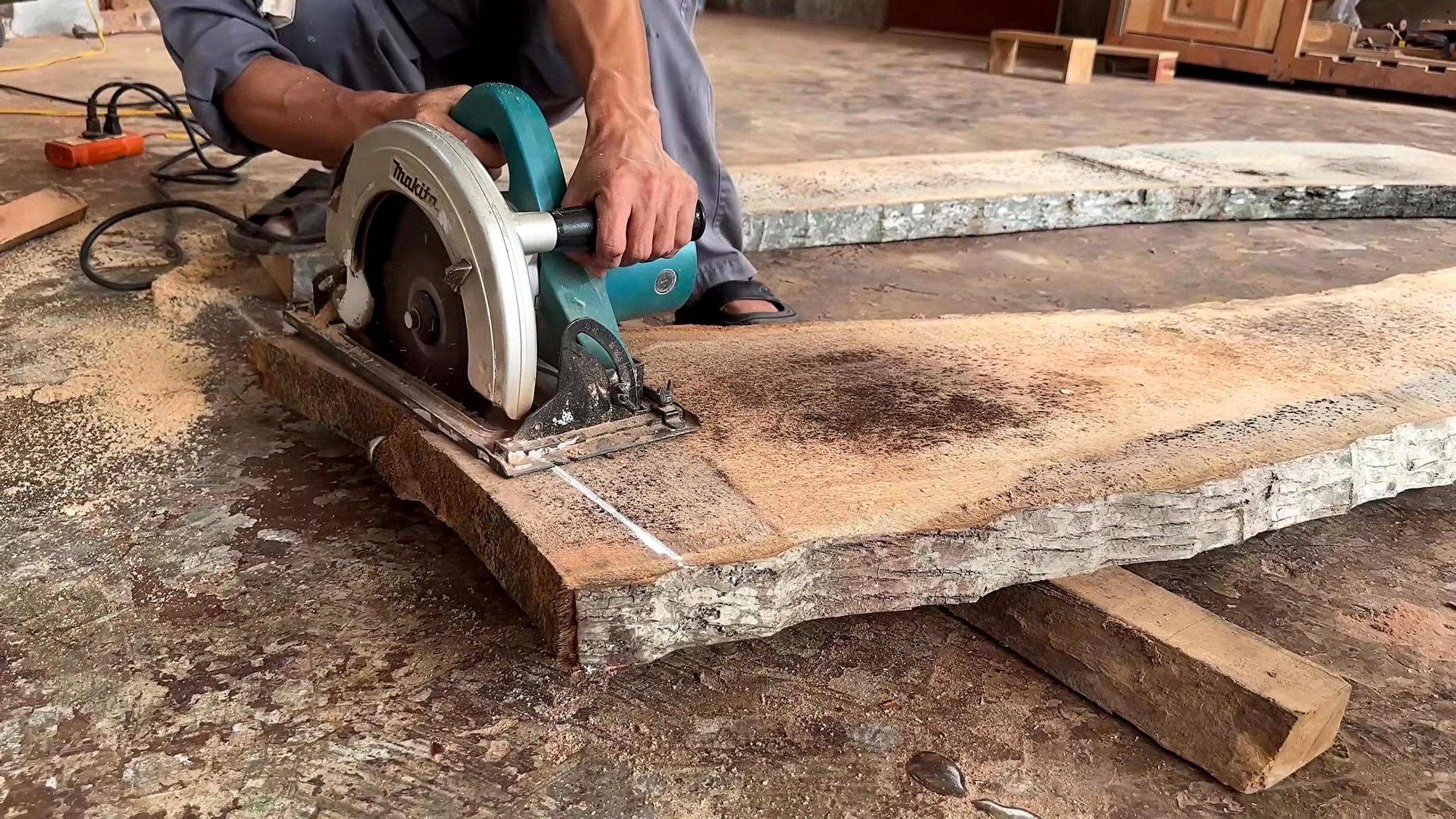
A reader should watch the first minutes with three questions in mind. First, is the trunk being held so the tool can cut safely and predictably? Second, does the exposed surface show dense usable fiber or weak material that must be removed? Third, does the maker adjust the plan after the first reveal, or simply continue with a fixed idea? These questions turn a viral conversion clip into a real woodworking lesson.
Why The Dead Coconut Palm Wood Furniture Process Needs A Different Reading
Coconut palm behaves differently from many woods used in furniture. It is often described as palm wood, but its internal structure is closer to a bundle of fibers than a log with conventional growth rings. The outer zone can be harder and more attractive, while the inner zone may be lighter, softer, and less dependable for load-bearing parts. That means the first cut is not only about finding grain. It is about mapping density.
In a typical hardwood milling article, the focus might be board width, figure, knots, and pith. In a coconut palm furniture process, the focus shifts. The maker has to ask whether the darker fiber area can be preserved, whether softer zones need backing, whether a panel must be laminated, and whether the final part is decorative, structural, or both. A large dramatic piece is not automatically a strong furniture part.
The setup frame below supports that reading. It is not enough to see the material placed near a machine. Tecatool readers should inspect how the piece is oriented and whether the work order gives the maker a clean reference face. Coconut palm can splinter and tear if the cutter attacks unsupported fibers. A safer process creates a readable surface, then uses that surface to decide the next pass.
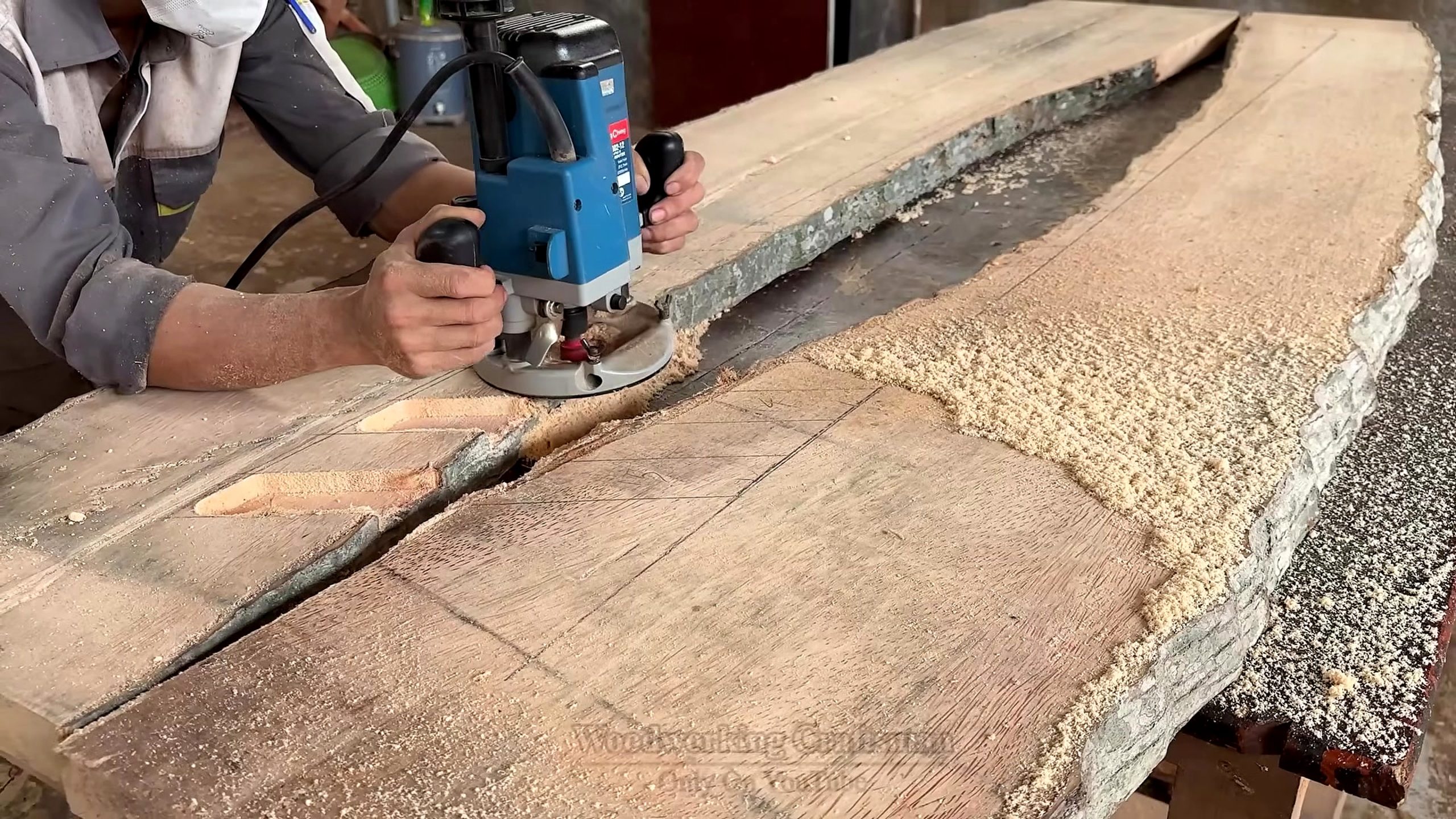
This is also where overclaiming can damage an article. The source title suggests a luxury masterpiece, but the video does not need exaggerated numbers to be interesting. The real story is that difficult salvaged material can become useful when the shop respects its limits. If the final piece is attractive, that result is earned through sorting and control, not through the title alone.
Opening Cuts In The Dead Coconut Palm Wood Furniture Process
The opening cut is the first honest test. It tells the maker whether the dead coconut palm has enough dense, continuous material to justify more work. A shop might cut away weak material, rip strips from stronger areas, or reserve the best faces for visible panels. If the exposed face shows voids or unstable zones, the maker may need shorter components, thicker safety margins, or a laminated build instead of a single wide board.
From a Tecatool perspective, this is where the dead coconut palm wood furniture process becomes a source-based article rather than a before-and-after story. The camera may move quickly, but the reader should slow down and look for decisions: which side is cut first, how the operator reacts after seeing the surface, whether offcuts are discarded or reused, and whether the final layout protects the strongest fibers.
The main-work frame below is a useful checkpoint. It shows the stage where material, tool path, and operator judgment meet. A clean article should connect this frame to practical decisions instead of repeating that the result is amazing. If the material is irregular, the maker needs a plan for yield. If the piece is intended for furniture, the plan also needs a path toward stable dimensions.
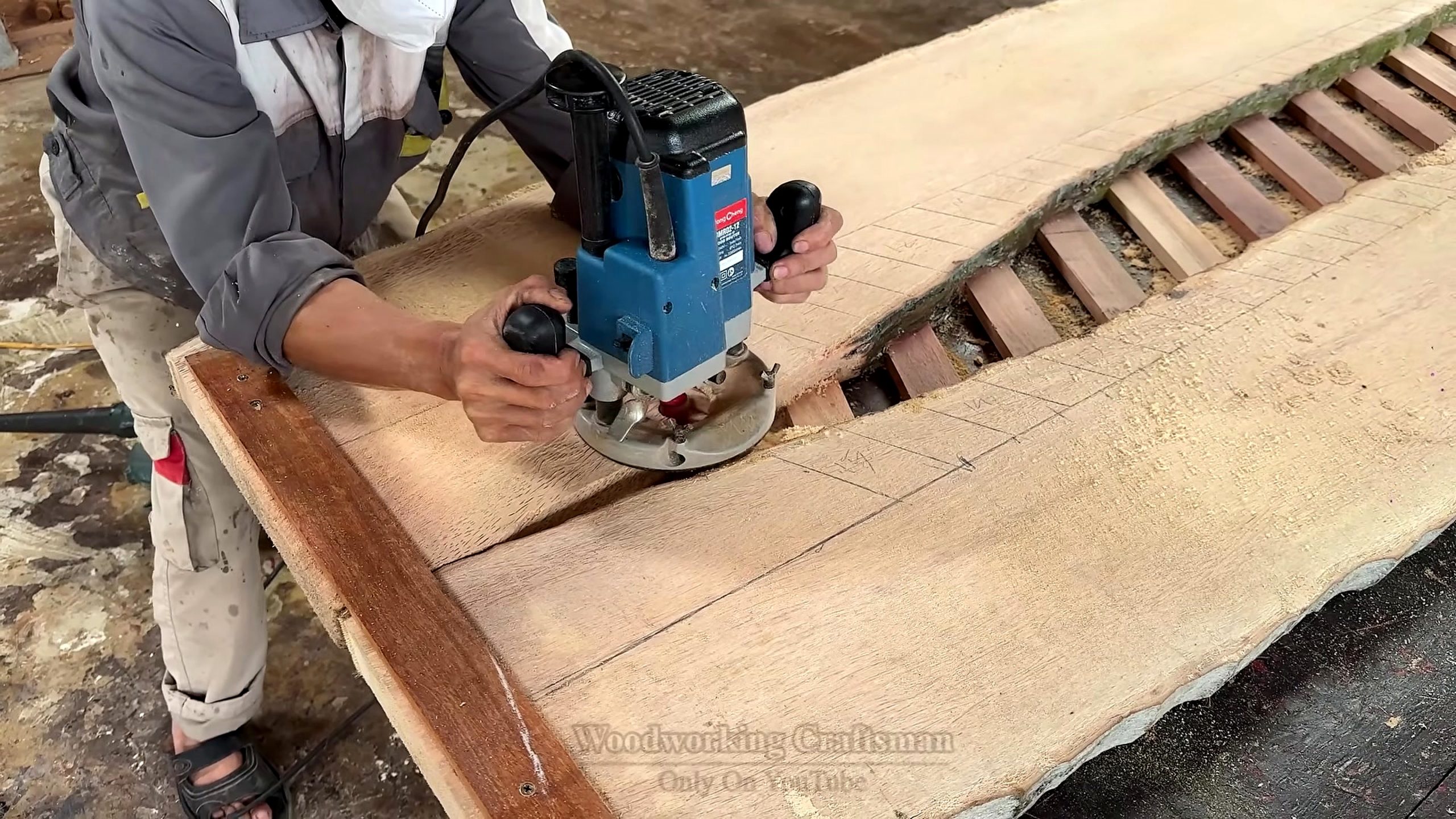
For readers who want to apply the lesson, the checklist is simple. Mark the denser outside zones. Remove material that is soft, punky, cracked, or impossible to support. Keep parts oversized until drying and flattening are complete. Avoid promising a final furniture use until the piece has survived the next operations. Coconut palm can be beautiful, but beauty is not the same as stability.
Drying Checks In The Dead Coconut Palm Wood Furniture Process
The source video can show cutting and shaping, but it cannot compress the entire drying and stabilization problem into a few shots. Any dead coconut palm wood furniture process article should make that limit clear. Moisture content, drying time, climate, shop storage, and final part thickness all affect whether the piece stays flat enough for use. Without those details, a responsible article can discuss process risk, not guaranteed results.
Stability checks begin after the first pieces are opened. The maker can inspect whether the stock cups, twists, checks, or crumbles. The best-looking surface may still need rest time before it is cut to final dimension. In many salvage workflows, the safest habit is to mill oversize, let the material move, then flatten and trim later. That protects the project from a common mistake: building around a fresh surface before it has shown its behavior.
The detail-check frame below is important for that reason. It represents the inspection stage, not just a pretty close-up. A viewer can ask whether the surface is continuous, whether defects interrupt the usable width, and whether the piece needs reinforcement before it becomes a table part, panel, rail, or decorative insert.
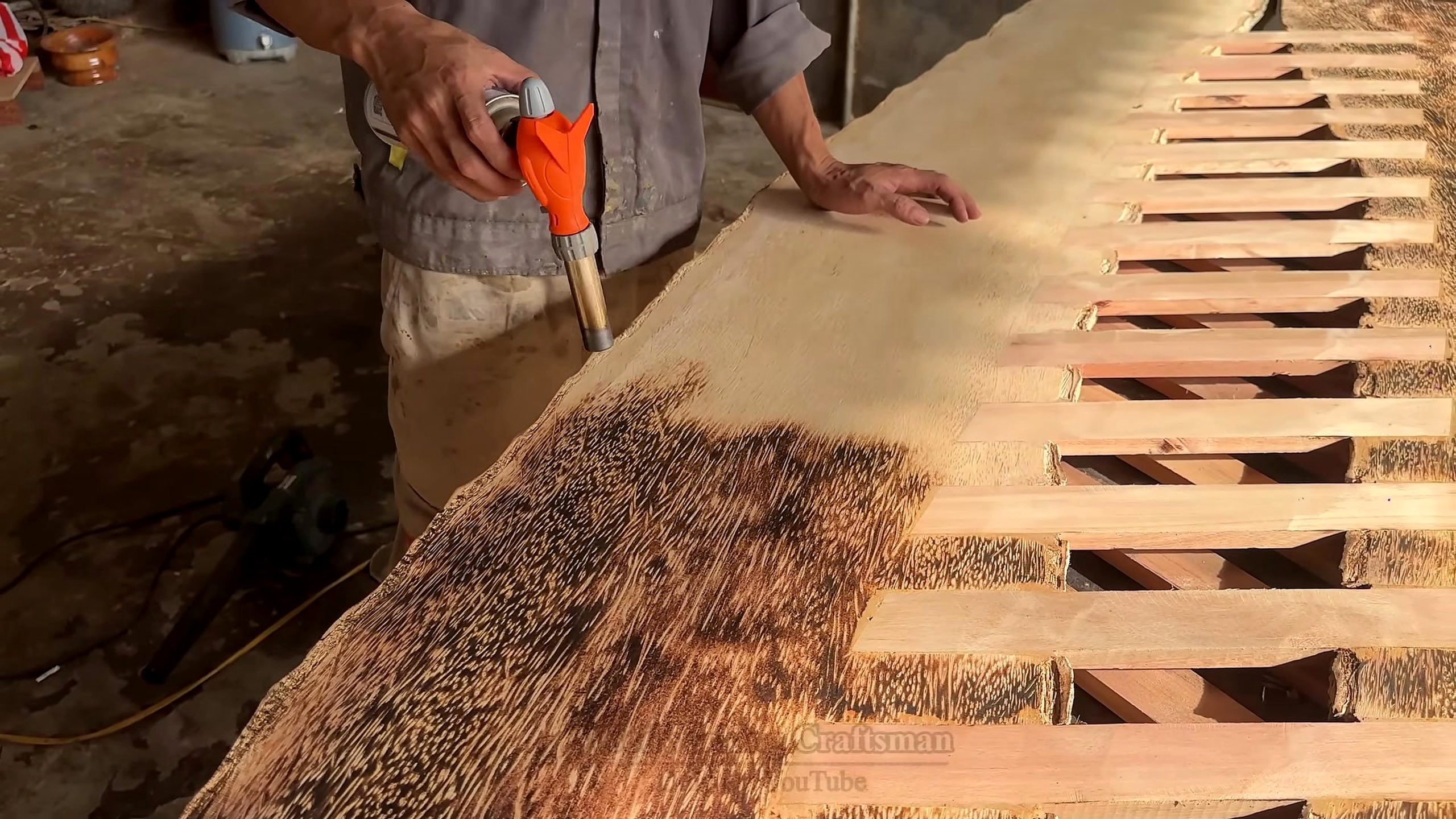
For a small workshop, this stage has buying implications. Salvaged palm may look inexpensive or exciting, but it can require extra blades, sanding time, sealing steps, and failure allowance. If the material is intended for a customer piece, the shop should build testing time into the schedule. The cost of the project is not only the raw log. It is the handling, waste, drying, and risk control needed to make the result dependable.
Joinery Choices In The Dead Coconut Palm Wood Furniture Process
Joinery is where a palm furniture project can succeed or fail quietly. Dense outer fibers may hold a shape well, while softer zones may not carry screws or small tenons like conventional hardwood. If the final furniture uses palm as a visible panel, the joinery can be hidden in a stronger frame. If palm is used structurally, the maker needs larger bearing areas, careful pilot holes, and a finish plan that reduces moisture exchange.
The video title talks about a luxury masterpiece, but the practical question is more specific: what role does each palm piece play? A decorative tabletop insert has different demands than a chair leg. A door panel has different demands than a bench rail. A table apron, stretcher, or leg has to resist load, racking, and seasonal movement. The article should not treat every attractive board as a structural board.
A useful Tecatool reading of the dead coconut palm wood furniture process separates three part types. Visible skins need attractive fiber and clean surface prep. Core parts need dependable strength and predictable machining. Accent strips need consistent color and a way to stay attached over time. A maker may combine coconut palm with a different supporting wood, metal fasteners, epoxy fill, or a frame construction. Those choices are legitimate when they are described as construction choices, not as magic.
The same logic applies to glue-ups. If the palm strips vary in density, clamping pressure must be controlled so softer areas are not crushed. Adhesive surfaces should be clean, dry enough for the chosen glue, and shaped so the joint has real contact. When a video skips quickly from cut parts to a polished object, readers should remember that joinery and glue-line quality are the hidden steps that decide whether the result lasts.
Surface Prep And Finish Checks
Finishing palm material can be rewarding because the fiber contrast can look strong under a clear finish. It can also be unforgiving. Uneven density may sand at different rates, leaving ripples if the operator presses too hard. Open fibers can drink finish differently. Soft or damaged zones may need filling, sealing, or removal. The best finish plan begins before the final sanding pass.
The result-review frame below gives readers a way to inspect the later stage of the dead coconut palm wood furniture process. Look for whether the surface appears even, whether corners are clean, whether the darker fibers are preserved without rough tear-out, and whether the finished shape matches the material’s strength. The frame should be read as evidence of a stage, not as proof of price or long-term durability.
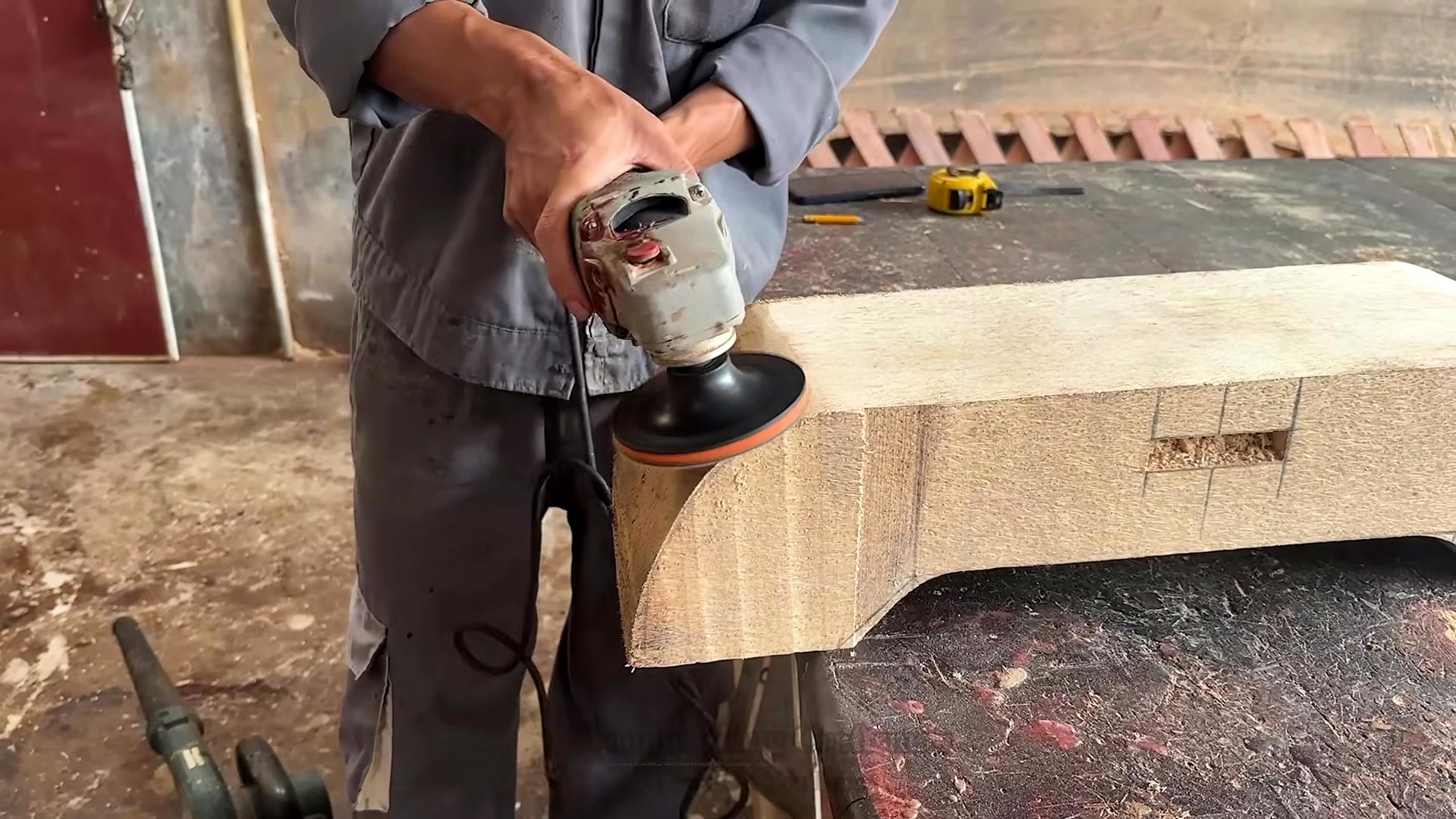
In a practical shop, finish testing should happen on offcuts before the main piece is coated. A clear oil, water-based finish, film finish, stain, or filler can change the appearance of palm fiber dramatically. Offcut tests show whether the contrast improves, whether blotching appears, and whether sanding scratches remain visible. This is a small step, but it prevents a dramatic source-video result from turning into a risky customer piece.
Surface prep also affects SEO honesty. A public article should not tell readers that the video proves a finished furniture product is premium unless the finishing, assembly, and final inspection are actually shown. It is better to say that the source demonstrates a promising conversion process and then explain the remaining checks a shop would need before sale or daily use.
Tecatool Buying Lessons From The Dead Coconut Palm Wood Furniture Process
The strongest lesson from this dead coconut palm wood furniture process is that salvaged material has two costs: the price of the raw material and the price of making it predictable. A viewer may see a beautiful result, but the maker has to pay in time, blade wear, sanding, sorting, drying, and rejected pieces. That does not make the process bad. It makes planning more important.
For tool buyers, the source points toward practical categories rather than one magic product. Shops need stable support, accurate cutting, dust control, sharpening discipline, clamping options, sanding equipment, and finish testing supplies. If a reader is planning a similar project, the first purchase decision should not be the most dramatic machine in the video. It should be the missing control point in the reader’s own workflow.
For content readers, the source also gives a useful verification habit. Pause at the setup, the first cut, the main work, the detail check, and the result review. If those stages are visible, the video can support a process article. If the video hides those stages, the article should be more cautious. Search traffic is valuable only when the page helps a real person inspect the work with better questions.
For workshop owners, the safest takeaway is to treat coconut palm as a material that may need a hybrid construction plan. Use the most attractive and dense sections where they make sense. Support weaker sections with better framing. Test finish on offcuts. Avoid final sizing too early. Keep claims tied to visible evidence. That approach gives the project a better chance of becoming useful furniture rather than a one-time reveal.
Commercial context: this source does not state a tool price, paid offer, sale value, or promotion, so Tecatool does not invent one. For buying research, Compare woodworking tools, setup ideas, and process recommendations in the Tecatool woodworking archive before choosing blades, clamps, sanding gear, finishing supplies, or workshop services for a similar salvaged-palm project.
FAQ
Can dead coconut palm really be used for furniture?
Yes, dead coconut palm can be used for furniture when the usable dense zones are sorted, dried, stabilized, and joined correctly. The source video supports the conversion idea, but it does not prove every piece of dead palm is suitable.
What is the biggest risk in a coconut palm furniture process?
The biggest risk is assuming the whole trunk behaves like normal hardwood. Coconut palm can contain uneven density, soft interior material, checking, and fiber tear-out, so sorting and stability checks matter before joinery.
Why does the first cut matter so much?
The first cut reveals whether the material has continuous dense fibers, weak areas, cracks, or defects. That information determines whether the maker should preserve wide parts, cut smaller components, or reject sections.
Should a buyer trust a source video as proof of final quality?
A source video is useful evidence for visible workflow stages, but not full proof of final quality unless it shows drying, joinery, finishing, and inspection. Buyers should treat it as process evidence, not a warranty.
Sources
Sources: Woodworking Craftsman source video for the dead coconut palm wood furniture process. The analysis above uses the source video frames and avoids unsupported claims about exact value, moisture, age, species grade, buyer, tool price, or final sale price.