
Logging before chainsaws was not primitive guesswork. It was a demanding tool system built around axes, crosscut saws, springboards, wedges, rigging, animal power, water routes, and experienced crews who understood how giant trees behaved before they fell.
For more Tecatool context, see our Woodworking archive and the related feature From Giant Timber to Luxury Table.
The source video, from Archibald History, asks how people brought down 300-foot trees before modern cutting equipment existed. This article turns that question into a practical Tecatool recap focused on tools, process, safety, and the machinery lessons hidden inside older forestry work.
Table of Contents
Logging Before Chainsaws: Why The Work Was So Demanding
The source video asks a practical historical question: how did loggers bring down enormous trees before the chainsaw changed forestry work? The answer is not one single tool. Logging before chainsaws depended on teams, axes, crosscut saws, springboards, wedges, rigging, animal power, water routes, and a deep understanding of wood under tension.
Modern viewers are used to engines doing the hard part. In the older logging world, the crew had to create leverage by hand. Every notch, every saw stroke, every wedge, and every escape path mattered because a tree hundreds of feet tall stored more energy than a small crew could afford to misread.
Why 300-Foot Trees Changed The Whole Plan
A 300-foot tree was not just a taller version of an ordinary tree. Height changed the risk, the fall path, the sound cues, and the amount of wood that had to be controlled once the trunk began to move. Logging before chainsaws required workers to think in terms of direction, lean, wind, ground slope, and obstacles long before the first deep cut was made.
The practical problem was simple but brutal: once a giant tree committed to falling, nobody could stop it. The crew had to predict where it would go and prepare the cut so gravity helped rather than punished them. That made planning just as important as strength.
Axes Were Layout Tools, Not Just Cutting Tools
Axes did more than remove wood. They shaped the undercut, cleaned bark, opened working faces, and helped crews read the grain. On giant timber, an axe was a layout tool as much as a chopping tool. The first notch showed the intended fall direction and gave the later saw work a target.
A clean notch reduced confusion when several workers were operating around the same trunk. It also helped control hinge wood, which is the uncut section that guides the tree as it starts to fall. Logging before chainsaws demanded this kind of quiet geometry because the tools were slow and the consequences were fast.
Crosscut Saws Turned Muscle Into Steady Progress
The crosscut saw was the central machine of the pre-chainsaw woods. It had no engine, but it translated two workers’ rhythm into a deep, controlled kerf. Teeth were filed to cut across grain, clear sawdust, and keep the blade moving through dense wood without binding.
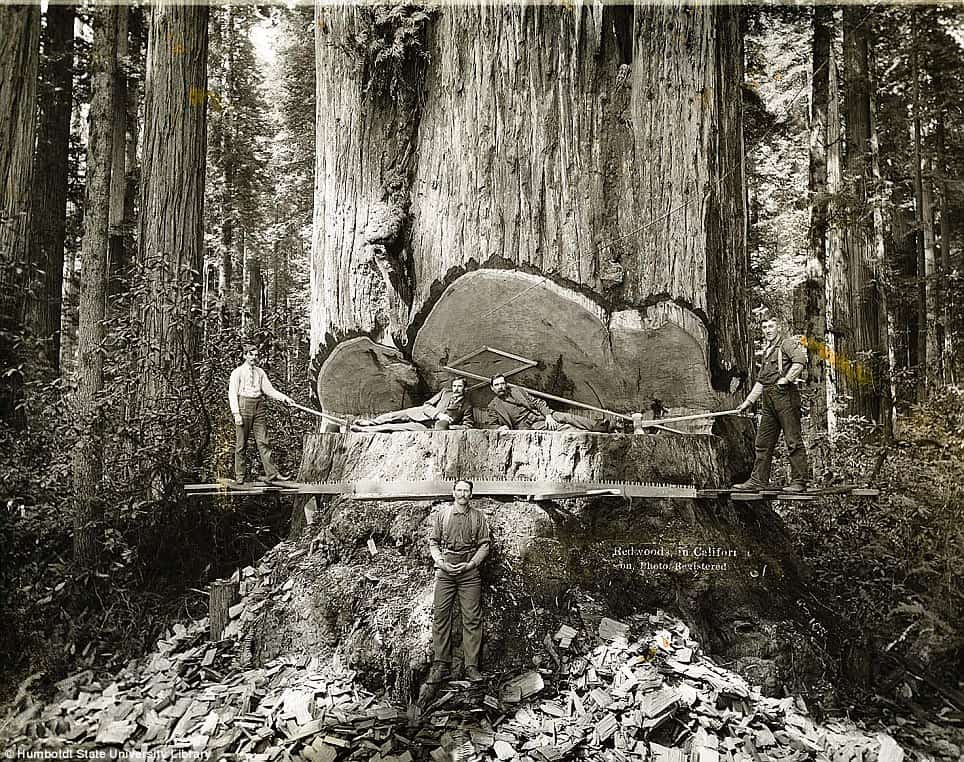
Good saw work was not wild effort. It was timing. One worker pulled while the other gave the saw back, and the cut advanced through repeated, balanced strokes. If the saw pinched, the crew used wedges to reopen the kerf. If the teeth were dull, the whole operation slowed. Logging before chainsaws made maintenance part of production.
Springboards Put Workers Above The Worst Wood
Springboards are one of the clearest signs of old-growth logging. Workers cut pockets into the trunk, inserted narrow boards, and stood on those platforms while chopping or sawing above the swollen base. The goal was to reach cleaner, narrower wood where the cut could be more predictable.
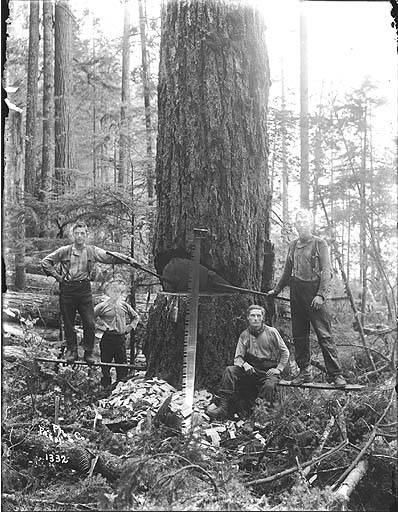
This was dangerous work, but it solved a real problem. The butt of a huge tree could be flared, dirty, wet, or filled with irregular grain. Working higher reduced wasted effort and helped the crew create a better felling cut. Logging before chainsaws often meant building a temporary work platform on the tree itself.
Wedges Helped Control The Kerf And The Fall
Wedges were small tools with huge importance. As the back cut deepened, wedges kept the kerf from closing on the saw. They could also encourage the tree to move in the intended direction when the natural lean was manageable. A wedge did not overpower a giant tree, but it gave the crew influence at the critical moment.
The best crews used wedges with patience. They listened for cracking, watched the kerf, and kept people out of the danger zone. Logging before chainsaws was full of these small corrections. The work looked rough, but the safest version of it depended on close observation.
Escape Routes Were Part Of The Cut
An escape route was not optional. Before the final fibers released, workers needed a clear path away from the stump and away from the expected fall line. Falling branches, trunk bounce, splitting wood, and shifting roots could all turn a successful cut into a dangerous surprise.
This is one reason the old logging process took time. Crews had to clear brush, read the ground, and decide where everyone would move when the tree started to go. Logging before chainsaws was not only about how to cut. It was about where to stand when the cut finally worked.
Why Team Rhythm Mattered
A two-person crosscut saw demanded cooperation. If one worker pulled too hard or broke rhythm, the saw could chatter, bind, or waste energy. Experienced sawyers learned to let the tool cut instead of fighting it. That skill kept the line straighter and reduced fatigue during long cuts.
Large-tree felling could take hours, and fatigue increased risk. Team rhythm helped preserve strength. It also gave the crew a shared sense of what the tree was doing. Logging before chainsaws was physical labor, but it was also communication through pace, sound, and feel.
Tool Sharpening Was A Production Skill
A dull crosscut saw could turn a difficult job into a miserable one. Saw filers were essential because tooth shape, raker depth, set, and sharpness changed how efficiently the blade moved through the wood. In big timber, small sharpening errors multiplied across thousands of strokes.
This is an important Tecatool lesson: maintenance is not separate from machine performance, even when the machine is hand powered. Logging before chainsaws depended on sharp steel, careful filing, and workers who understood how tool geometry affected the cut.
Moving The Log Was Often Harder Than Felling It
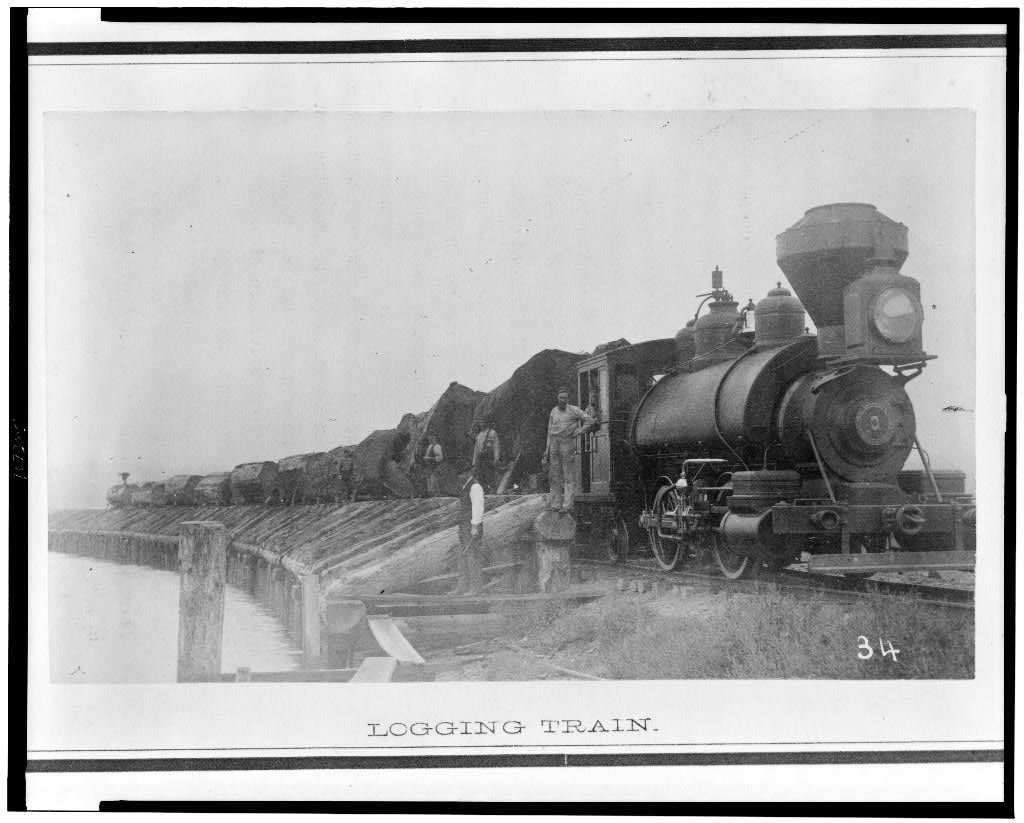
Once the tree was down, the job was far from finished. A massive trunk had to be limbed, bucked, moved, loaded, or floated. Before trucks and hydraulic loaders became common, crews relied on horses, oxen, steam donkeys, block and tackle systems, sleds, rail spurs, and rivers.
This logistics problem shaped which trees were worth cutting. A valuable trunk still had to reach a mill. Logging before chainsaws was connected to roads, water, terrain, and weather. The felling cut was dramatic, but transport decided whether the work became lumber.
Water Routes Made Remote Timber Valuable
Rivers and splash dams helped move timber before modern road networks reached deep forests. Logs could be floated downstream, collected, and driven toward mills. This method was powerful, but it required timing, water control, and workers who could manage jams and moving logs safely.
The water route explains why some old logging camps formed around rivers rather than roads. If a crew could float timber, the forest became economically reachable. Logging before chainsaws was therefore an engineering story as much as a tool story.
Why Old Logging Photos Still Teach Modern Readers
Historical logging photos show the scale of the work in a way words alone cannot. Workers standing beside huge trunks make the risk visible. Springboards show how crews reached usable cutting height. Crosscut saws show how much of the work depended on rhythm and patience.
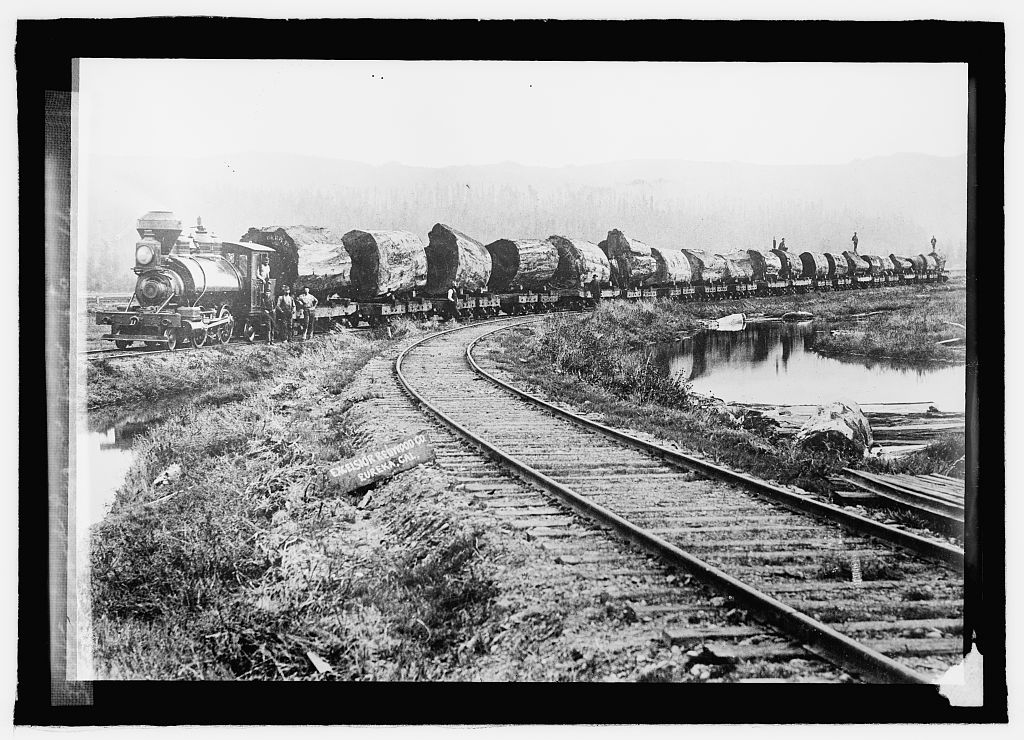
For this article, the inline images are historical reference images rather than extracted frames because YouTube blocked stream extraction with a bot check. They still support the topic honestly: logging before chainsaws, giant timber, springboards, and crosscut-saw work.
Safety Lessons That Still Apply
Modern equipment has changed forestry, but some safety principles remain familiar. Clear the work area. Understand the lean. Prepare an escape route. Keep tools sharp. Communicate before the final cut. Watch for stored tension in wood. Respect the weight of the material.
The old crews had fewer mechanical advantages, so they relied heavily on procedure. That is the useful modern takeaway. Logging before chainsaws was dangerous, but the best version of it was not careless. It was controlled work under harsh conditions.
What Modern Machines Changed
Chainsaws changed the speed and portability of felling. Later machines changed even more: skidders, feller bunchers, loaders, harvesters, trucks, and road-building equipment all reduced the amount of manual labor needed for each tree. They also changed how crews planned production.
But speed can hide process. Looking back at logging before chainsaws reminds readers that modern machines replaced a long chain of human decisions. The same wood physics still exist. Engines simply let crews work faster and with different risks.
What The Video Gets Right As A Historical Question
The video title works because it starts from a simple puzzle. Everyone understands that a 300-foot tree is enormous. The interesting part is imagining how people handled that scale without chainsaws, hydraulic lifts, or modern carriers. That question opens the door to tools, technique, and forest history.
A good recap should avoid pretending that one method solved every situation. Region, species, terrain, crew skill, and available transport all mattered. Logging before chainsaws looked different in redwood country, the Pacific Northwest, the Northeast, and southern forests.
Common Mistakes In Understanding Old Logging
One mistake is assuming the work was only brute force. Strength mattered, but technique mattered more. A crew could waste enormous effort if the notch was wrong, the saw was dull, the wedges were late, or the fall path was misread.
Another mistake is judging old methods only by modern speed. The older system had a different pace because every step required human control. Logging before chainsaws was slower, but skilled crews still developed specialized methods for very large timber.
Reader Checklist For Historical Logging Videos
When watching a historical logging video, look for the tools being discussed, the tree size, the method of making the notch, how the back cut is controlled, whether springboards are used, and how the log is moved after it falls. Those details separate useful history from vague nostalgia.
Also check whether the video distinguishes between felling and transport. Many stories focus on the dramatic fall, but the harder business problem was often getting the wood out. Logging before chainsaws only made sense when crews had a practical route from forest to mill.
How Crews Read Lean, Crown Weight, And Wind
Before the back cut began, experienced crews studied the whole tree rather than only the trunk. The crown could hold more weight on one side, old storm damage could weaken a section, and wind could turn a careful plan into a bad one. Logging before chainsaws required workers to combine visible clues with local experience because the tool could not correct a poor reading quickly.
A giant tree also interacted with nearby trees. Limbs could catch, falling wood could knock loose dead tops, and a trunk could twist if its hinge was uneven. The best crews treated the surrounding stand as part of the job site. They cleared escape routes, warned other workers, and avoided standing where a rolling log or falling branch could reach them.
That judgment is easy to overlook when a modern viewer watches a short recap. The dramatic part is the final fall, but the professional part is the quiet inspection before it. Logging before chainsaws rewarded crews who slowed down early so the last minute would be less chaotic.
What The Kerf Told The Sawyers
The saw cut itself gave constant feedback. If the kerf began to close, the sawyers knew compression was increasing and wedges were needed. If the saw started drifting, they had to correct the line before the hinge became uneven. If sawdust changed texture, it could suggest a knot, pitch pocket, or different grain behavior inside the trunk.
This is why crosscut saw work was more skilled than it looks. Logging before chainsaws asked workers to feel resistance through a long blade while coordinating with another person. A smooth rhythm protected the tool, saved energy, and kept the cut readable. A rushed rhythm could hide warning signs until the saw was already bound.
For Tecatool readers, the kerf lesson connects directly to modern cutting. Whether a person uses a hand saw, a chainsaw, a band saw, or a mill, the cut tells a story about tension, sharpness, feed rate, and material behavior. Historical logging simply makes that lesson larger and more dangerous.
Why Bucking And Limbing Took Planning Too
After felling, the trunk still had to be turned into movable sections. Bucking a giant stem into logs was another saw job, and it brought its own hazards. A downed tree could be suspended between high points, pressed into uneven ground, or loaded with hidden tension that changed as each section was cut free.
Limbing also mattered because branches could hold the trunk off the ground or spring when released. Logging before chainsaws did not end when the tree hit the forest floor. The crew still needed a sequence: remove limbs, choose log lengths, open transport paths, and avoid cutting in a way that trapped tools or workers.
That sequence affected value. A clean bucking plan produced logs that matched mill needs and transport limits. A poor plan could waste good timber or create pieces too awkward to move with the available equipment. The old woods demanded production thinking from the stump all the way to the landing.
How Old Transport Systems Shaped The Cut
The available transport system influenced where and how loggers worked. If timber had to be skidded by animals, the route needed manageable grades and enough room to turn. If a steam donkey and cable system was available, crews could pull heavier logs from more difficult ground. If water transport was the plan, timing and river access became part of the logging calendar.
This meant logging before chainsaws was never just a tool question. A crew might be able to fell a tree, but the business only worked if the log could reach a mill. Terrain, road building, rail spurs, river drives, and landing space all shaped the value of the standing timber before the first notch was made.
Modern machinery changed this calculation by expanding where crews could work and how quickly material could move. Yet the old lesson remains useful: cutting is only one step in a material-handling chain. Tecatool readers who work around wood, tractors, loaders, or sawmills will recognize that the bottleneck often moves from the cut to the transport stage.
Why The Tools Look Simple But The System Was Advanced
An axe, a crosscut saw, a wedge, and a springboard look simple beside a modern feller buncher. But simple tools can create advanced systems when skilled workers combine them with layout, timing, and transport. Logging before chainsaws was a field-built production system, not a random collection of hard jobs.
Each tool solved a specific problem. The axe shaped the notch. The crosscut saw advanced the main cut. Wedges preserved the kerf and influenced motion. Springboards raised workers to better wood. Rigging multiplied pulling power. Animals, steam, rails, sleds, and rivers moved weight that no human crew could carry.
That is the deeper reason historical logging remains interesting. It shows industrial thinking before small gasoline engines became normal in the woods. The crews were not simply waiting for better technology; they were already building practical systems with the power sources and materials they had.
How Camp Life Supported The Cutting Crew
Large-tree work also depended on camp organization. Crews needed food, dry clothing, repaired boots, replacement handles, sharpened saws, first-aid supplies, and a way to move information between the cutting area and the landing. Logging before chainsaws was physically centered at the stump, but the stump crew could not function without the support system behind it.
Saw filers, cooks, teamsters, blacksmiths, foremen, and transport workers all affected production. If the saws came back dull, the next day slowed. If the animals were tired or the cable system was down, logs piled up. If weather changed the roads or rivers, the whole plan shifted. The visible cut was only the front edge of a much larger operation.
That is useful for modern readers because it turns the story from nostalgia into operations thinking. A tool is only as productive as the system around it. Logging before chainsaws makes that point clearly: human strength mattered, but organization decided whether strength became lumber.
What A Modern Viewer Should Notice In The Video
When watching the source video, pay attention to the order of operations rather than only the size of the trees. The most valuable details are the setup choices: where workers stand, how they open the notch, when wedges appear, why springboards are used, and how the fallen timber is moved after the dramatic moment ends.
Those details help separate real process from visual spectacle. Logging before chainsaws looks impressive because the trees are huge, but the method is impressive because the crew breaks an overwhelming job into controlled steps. Each step reduces uncertainty: inspect, notch, saw, wedge, retreat, limb, buck, move, and deliver.
That sequence is also why this topic belongs beside modern machinery coverage. Today’s machines speed up the same chain of decisions. They do not erase gravity, grain, terrain, or transport limits. They give operators new ways to manage those forces, and the old hand-tool era helps explain why those machines became so valuable.
Editorial Notes For Readers
The source video was visible enough to confirm the title, channel, description, and topic, but YouTube blocked direct stream extraction with a bot check during production. For that reason, this Tecatool draft uses public historical reference images to illustrate logging before chainsaws instead of claiming that the inline images are exact frames from the video.
That distinction matters. A useful article should not pretend a public-domain archive image came from the video. The images here support the historical tool story: large timber, crosscut saws, springboards, log transport, and early logging infrastructure. Before public release, an editor can replace them with verified video frames if the source stream becomes accessible.
Why This Topic Fits Tecatool
Tecatool covers tools, machines, woodworking, farming, tractors, and heavy equipment. This historical logging story fits because it shows what machinery replaced. Axes, crosscut saws, wedges, springboards, and rigging were the old tool system behind an industry that later became heavily mechanized.
For machine fans, the article explains the problem modern machines solved. For woodworking readers, it shows where large timber came from before it reached mills and shops. For history readers, it shows how tool design and field technique shaped forest work.
Final Tecatool Takeaway
The final takeaway is that logging before chainsaws was a complete system. It joined sharp hand tools, team rhythm, springboard work, wedges, escape planning, transport engineering, and hard-earned judgment. A 300-foot tree could not be handled by strength alone.
That is why the topic remains useful today. Modern machines are impressive, but they make more sense when we understand the problems they replaced. The old logging world was slower and riskier, yet it was full of practical engineering lessons that still matter when working around heavy wood.
Frequently Asked Questions
How did loggers cut huge trees before chainsaws? Loggers used axes to create notches, crosscut saws for the main cut, wedges to control the kerf, and springboards to work above wide or irregular butt wood.
Why did loggers use springboards? Springboards let workers stand above the flared base of a giant tree so they could cut cleaner, narrower wood with axes and crosscut saws.
Was logging before chainsaws safe? It was dangerous work. Skilled crews reduced risk with planning, escape routes, sharp tools, communication, and careful reading of tree lean and wood tension.
What changed when chainsaws arrived? Chainsaws made felling faster and more portable, but crews still needed planning, safety discipline, transport systems, and respect for the weight of timber.
Source video: How Loggers Cut Down 300-Foot Trees Before Chainsaws Existed.