
4000-year-old giant tree functions best as an analysis case study drawn from Massive Wood Workshop, rather than a generic promise of woodworking wonders. Observers should evaluate the footage based on log scale, grain direction, material defects, support placement, the initial readable face, the sequential order of work, and the final inspection indicators.
Table of Contents
4000-Year-Old Giant Tree: The Short Answer
This reference material ought to be viewed as a technical workflow example from Massive Wood Workshop, instead of accepting every dramatic promise at face value. Viewers can judge the video clips by examining log dimensions, grain patterns, flaws, stabilization points, the primary exposed surface, the visible progression of labor, and the concluding quality checks visible in the recording.
Tecatool avoids attaching independent product guarantees, age certifications, cost estimates, or manufacturer claims unless the visual frames provide clear proof. This approach keeps the discussion practical for audiences seeking the technical reality behind popular titles.
For this specific video, the core question is whether a viewer can pause playback to recognize sawmill preparation, initial cuts, final reveals, and subsequent lumber organization. When that is possible, the clip serves as a useful lesson in operational ordering, equipment selection, and safety evaluation. If certain details remain obscured, this page intentionally leaves them unverified instead of embellishing the narrative.
Such diligence ensures the content remains tied directly to a single public video source, one channel, a specific set of visual frames, and a focused woodworking intent.
A valuable takeaway for shop operators is the actual operating sequence, bypassing the sensationalized video title. Pay close attention to how stock is staged, operator positioning, whether machinery has adequate infeed and outfeed stabilization, and if the finished outcome receives proper inspection before moving forward. These small evaluations transform a standard online clip into a genuine workshop reference.
What The Footage Shows
The documentation baseline for this article is straightforward: publisher Massive Wood Workshop, primary category woodworking, keywords involving old timber and sawmill operations, and an analytical focus centered on timber breakdown from initial setup through final stock management.
This baseline serves a functional purpose by highlighting what can be verified independently, including title text, channel identity, frame progression, visible workpieces, hardware used, and the embedded media player. With those anchors established, the analysis remains valuable without needing to invent tree species, geographic origins, physical dimensions, acquisition costs, or theatrical background stories.
The opening moments should address basic contextual questions for 4000-year-old giant tree: the placement of the raw material, the scale handled by the operator, the primary reference face established first, and whether the workspace allows for safe subsequent movements.
Consequently, the article evaluates the upload in clear phases, beginning with source context, moving through material indicators, machinery progression, safety boundaries, result evaluations, and concluding with tooling implications. This structured method proves far more reliable than simply summarizing the most sensational phrase found in the video heading.
Followers of Massive Wood Workshop should still approach this clip as an independent reference because it features unique timing, specific titles, and distinct workflow clues. Relying on conclusions from older uploads would be less accurate than assessing this presentation on its own merits.
Within heavy machinery sawmill videos, the most instructive evidence often materializes during the quiet moments between high-energy cuts. A momentary pause before engaging a blade, a deliberate hand signal, an adjusted feed angle, or a reset of a support brace often explains why a procedure succeeds. Observers should look for these subtle control markers before accepting broad claims regarding speed or craftsmanship.
Material And Workpiece Reading
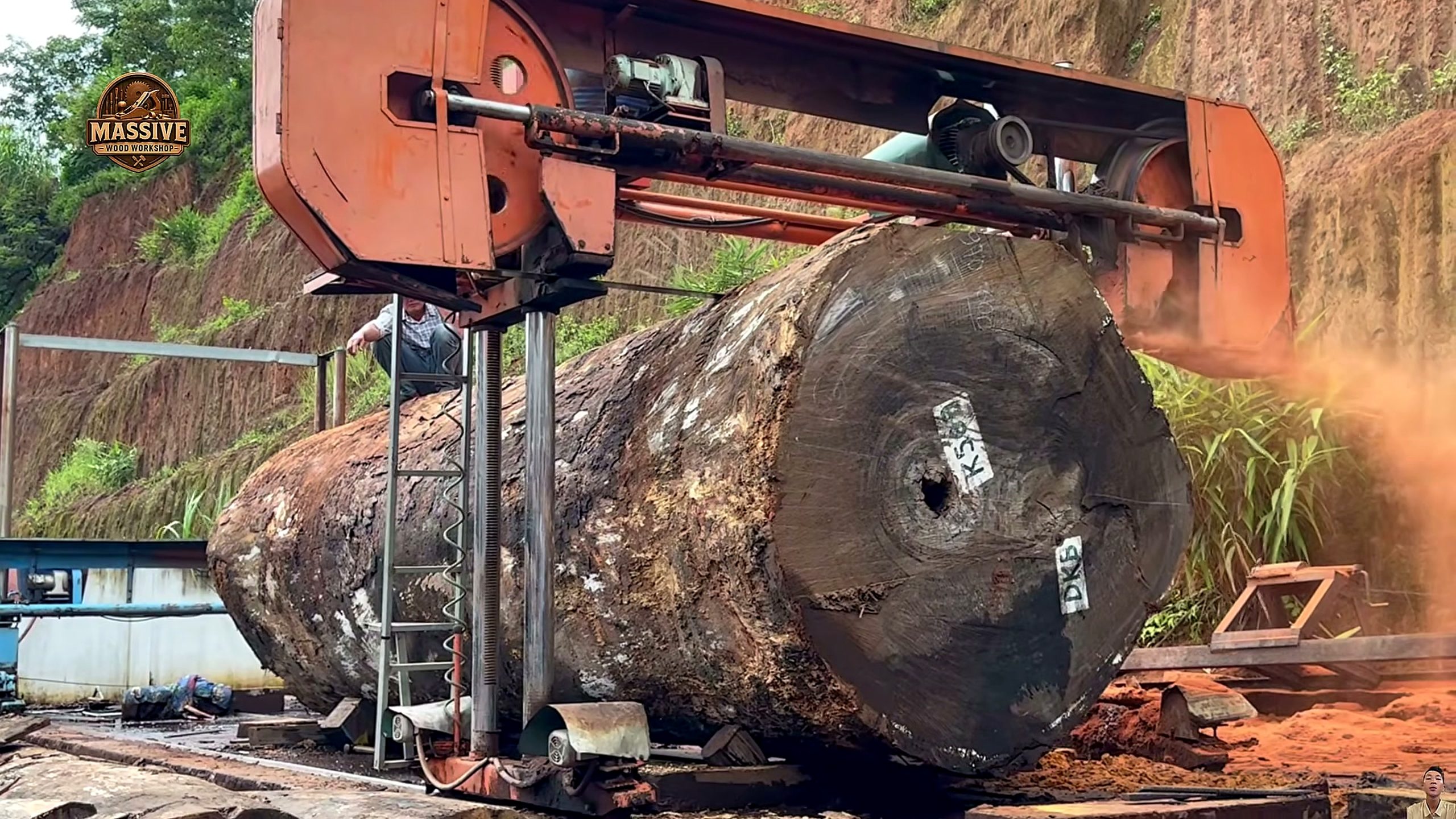
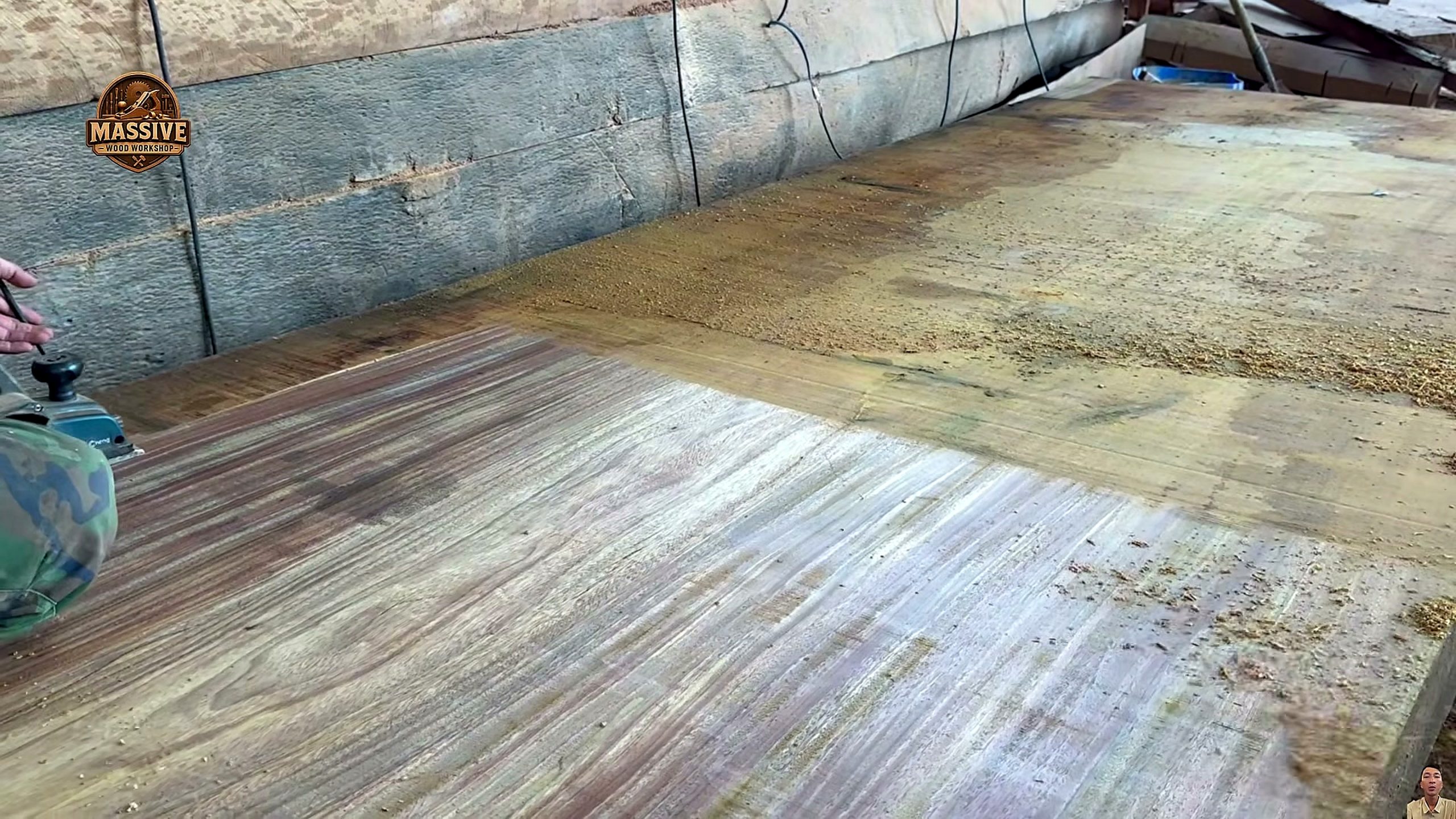
The material evaluation lens for this source focuses on log scale, grain orientation, natural defects, support locations, and the first readable surface. Observers should pause on early frames to check for stability issues, warping, surface splits, knots, color variations, and any anomalies that dictate how subsequent cutting or shaping ought to be planned. These visible indicators carry more weight than emotional title headings.
Proper woodworking methodology begins long before a cutting edge touches timber. Without secure stock stabilization, even elite tooling will yield subpar outcomes. Establishing a reliable initial reference point provides vital guidance for the remainder of the project, including where to eliminate waste, where to showcase attractive grain patterns, and where caution is required.
Regarding 4000-year-old giant tree, readers should verify whether elements mentioned in the title correspond with visible evidence. While the text describes observed features, it avoids guessing specific tree species, internal moisture percentages, machinery model numbers, or monetary valuations when the underlying footage lacks such proof.
Furthermore, the initial exposed surface influences commercial interpretations. A promising face can easily conceal internal stress, shifting fibers, or drying defects, while rough-looking stock might yield excellent timber after proper trimming. The key lesson lies in assessing the complete workflow sequence rather than judging a solitary glamor shot.
For professional shop owners, this necessitates setting aside dedicated time for thorough inspections. Taking measurements, marking reference lines, rotating logs, clearing away sawdust, checking edges, and documenting the sequence helps prevent costly errors. The source video acts as a prompt for these disciplined habits rather than replacing hands-on shop measurement.
Machine Order And Handling Sequence
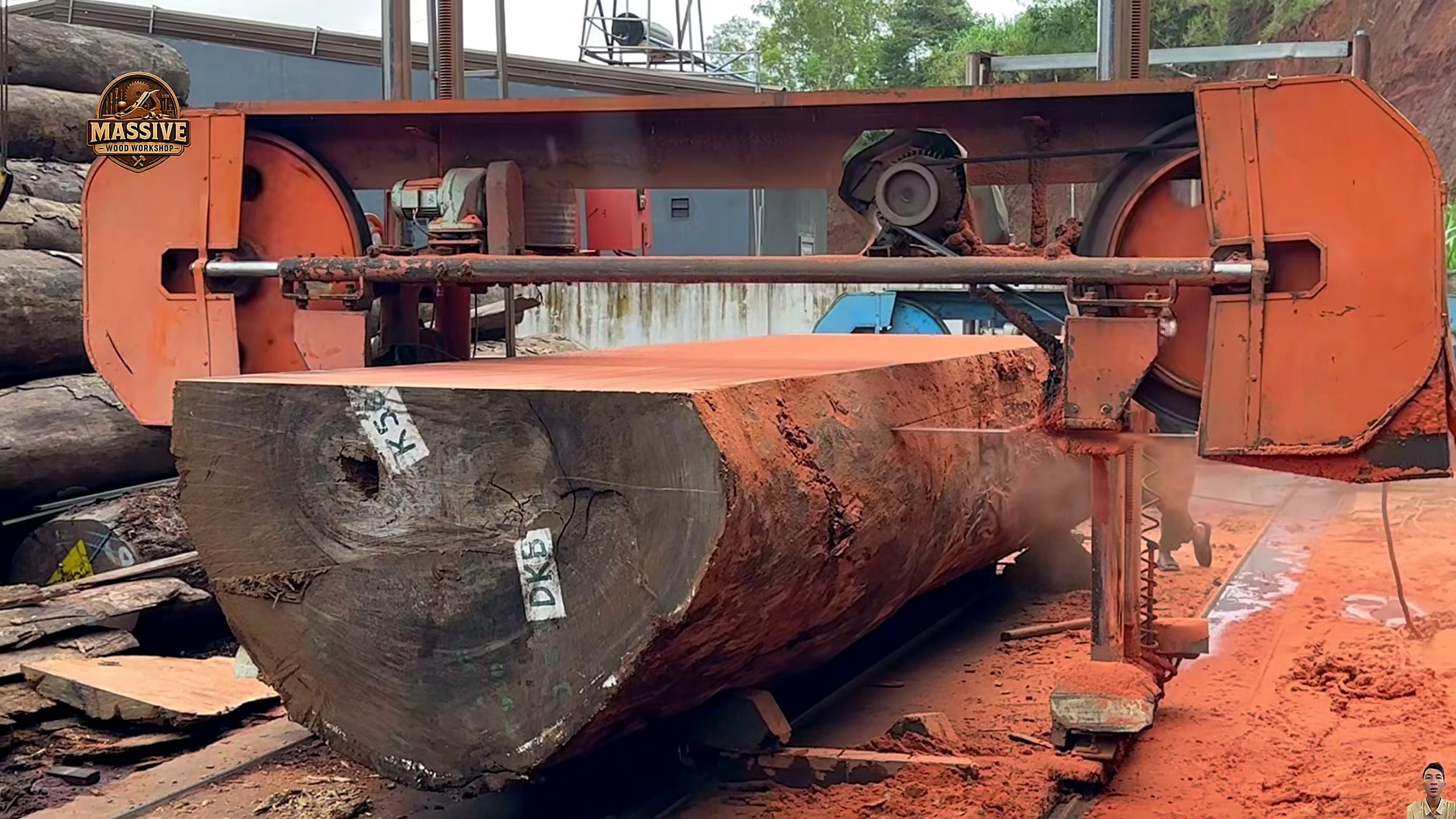
The mechanical lens applied here centers on the sawmill carriage, cutting trajectories, feed regulation, securing clamps, measurement guides, and material handling gear. A rigorous analysis observes the chronological order of actions: staging the workpiece, executing the initial controlled cut, pausing to verify results, repositioning supports, and proceeding only when subsequent cuts remain logical.
Observing mechanical sequences is precisely where many online videos provide genuine educational value. Viewers can determine whether operators adapt to material behavior or stubbornly force a rigid plan. Minor pauses, clamp adjustments, or altered feed directions often demonstrate greater competence than highly polished final reveals.
The value here stems not from universal proclamations, but from the exact sequence demonstrated in this public upload by Massive Wood Workshop.
Mechanical operations also distinguish rough milling from refined woodworking. Sawing, turning, planing, or industrial handling exposes usable timber, but it does not guarantee that the stock is dry, flat, jointed, sanded, finished, or fit for a customer. Subsequent procedures ultimately determine long-term durability.
Consequently, readers comparing equipment ought to list secondary support gear with the same care as primary machinery. Roller stands, toggle clamps, shims, layout markers, moisture meters, dust extractors, edge guides, sharpening routines, and adequate lighting often separate a risky stunt from a reliable workflow.
Operations involving two workers demand special attention because timing becomes an integral component of the setup. One person might manage feed rates or positioning while another monitors clearance zones, scrap management, or output flow. The transferable lesson here emphasizes clear communication: establish mutual stop signals, keep hands clear of pinch points, and halt operations immediately if a workpiece drifts off its intended path.
For production environments, this same progression translates directly into shift checklists. Confirm safety guards and emergency brakes, verify work-support heights, clear accumulated offcuts, prepare staging areas, and inspect the initial piece before launching full production runs. Such disciplines offer far more reliability than attempting to mimic the speed shown in edited media.
Risk Boundary And Unsupported Claims
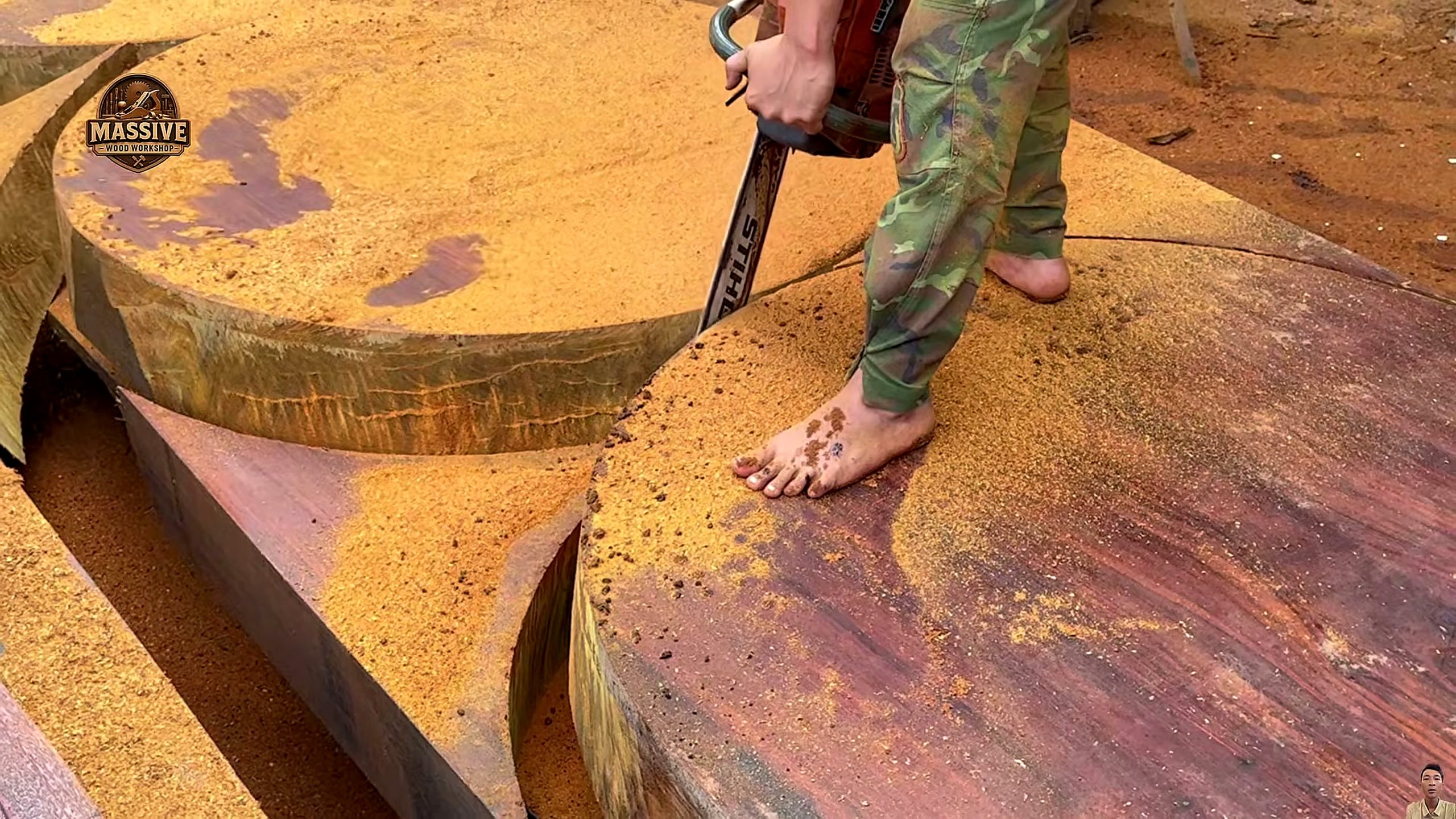
The operational risk boundary for 4000-year-old giant tree remains strictly defined by design. While the source supports visible statements regarding timber breakdown from initial setup to final stock management, it does not automatically validate claims of extreme age, rarity, financial value, client identities, structural ratings, factory output volumes, or finished performance metrics.
This boundary safeguards the audience. Viral woodworking titles routinely compress numerous unknowns into a single exciting hook. A higher-quality Tecatool review slows down these assertions, challenging viewers to verify what is actually visible, including the material condition, machinery used, subsequent operator choices, post-cut surface quality, and final inspection moments.
Whenever titles include numeric values, monetary figures, or superlatives, this page treats them purely as marketing language unless the video displays verifiable documentation. The article remains valuable because authentic process education requires no sensational embellishments. Practical instructional value emerges naturally from log dimensions, grain orientation, defect management, support structures, and controlled material handling.
Shop safety represents another crucial boundary. Recordings frequently capture hazardous techniques, demanding cuts, precarious lifting methods, or risky machine setups without endorsing them as best practices. Observers should utilize such moments to refine their own risk assessments, protective gear protocols, workholding stability, and stoppage points rather than copying dangerous clips without local evaluation.
This principle remains concise, attributable, and fully aligned with the visible FAQ section below.
How To Judge The Finished Result
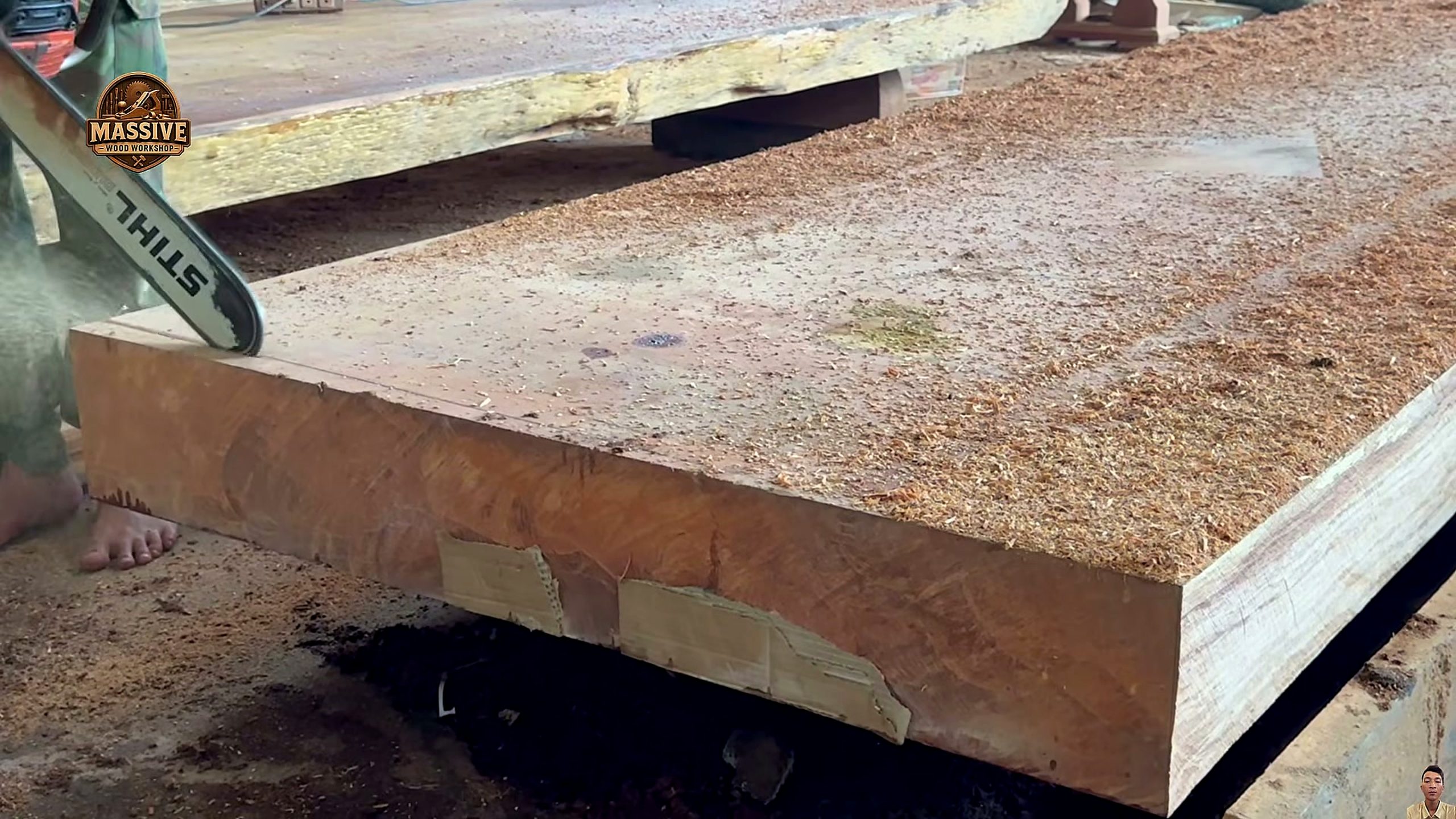
The result evaluation lens for this upload focuses on usable timber, slabs, blanks, or shop stock that only become viable after subsequent drying and rigorous inspection. Visitors arriving at this page typically want to understand what the video demonstrates, why the workflow matters, and what woodworkers should check before trusting the final product.
Finished result shots can look visually striking yet remain functionally incomplete. Observers must still determine whether exposed faces are continuous, if components retain sufficient thickness for subsequent flattening operations, whether internal flaws compromise structural integrity, and if the final stock will withstand drying stresses, movement, handling, and finishing.
Furthermore, final outcomes should be cross-referenced against initial setup conditions. If a finished piece looks impressive but originated from unstable setups, viewers should treat the clip as a cautionary tale. Conversely, if a striking finish follows a disciplined operational sequence, the workflow serves as a reliable pattern for future shop planning or purchasing decisions.
This structured evaluation proves far more useful than an impulsive reaction to a reveal shot.
Tool Context For Tecatool Readers
The tooling context for 4000-year-old giant tree emphasizes general categories over specific brand names. The visible workflow points toward sawmill carriages, cutting paths, feed controls, clamping devices, measuring references, and material handling gear, alongside layout instruments, workholding clamps, inspection gauges, sharpening supplies, sanding equipment, finishing agents, and cleanup tools that ensure repeatable operations.
Commercial intent should remain grounded in practical utility. Shoppers should avoid purchasing hardware simply because a video segment appears dramatic. Instead, the relevant inquiry focuses on which specific workflow stage requires reinforcement: securing awkward stock, establishing flat reference faces, executing clean cuts, capturing hazardous dust, checking moisture levels, flattening surfaces, or applying protective finishes.
Smaller workshops might benefit from auxiliary support tables, reliable clamps, superior blades, and disciplined measuring habits long before investing in heavy machinery. Conversely, high-volume production shops may require accelerated feed systems, enhanced safety barriers, replacement cutter heads, optimized storage racks, and rigorous quality-control checkpoints. The source material helps readers prioritize these acquisitions logically.
Readers are encouraged to utilize this source alongside the Tecatool woodworking archive for broader comparative insights. While the archive supplies general machinery and process context, this page remains strictly anchored to a single uploaded video and its specific visual frames.
This distinction is vital for helpful content delivery. The article provides source-grounded explanations initially, followed by purchasing checklists only where video evidence warrants them, avoiding any pretense that a video title alone verifies equipment specifications, professional endorsements, or guaranteed commercial outcomes.
Quick Summary
This page incorporates authentic frame captures, a visible FAQ section, an embedded media player, and a concluding source reference.
The introductory sections deliver direct answers, while the FAQ utilizes concise responses matching the body text.
Such measures prevent the article from degenerating into a disconnected summary devoid of verifiable references.
Commercial Tool And Service Checklist
Commercial product contexts related to 4000-year-old giant tree should remain focused on general equipment categories. While this source supports checklists covering sawmill carriages, cutting paths, feed mechanisms, clamps, measuring references, and handling tools, it should never promote specific brands, pricing packages, service quotes, or affiliate recommendations unsupported by the footage.
Begin by addressing the weakest link in your operational workflow. If the primary challenge in the source video involves material support, compare stands, clamping vises, outfeed rests, and secure holding strategies. When cutting control proves difficult, evaluate saw blades, sharpening methods, guide systems, feed supports, and dust extraction before contemplating major machinery purchases.
Service buyers can apply this identical checklist prior to soliciting contractor bids. Practical inquiries include determining incoming material conditions, identifying who establishes primary reference faces, learning how defects are managed, understanding measurement protocols, and discovering what shops do when results fall short of expectations.
For ongoing equipment research, compare Tecatool woodworking tool checklist articles after examining this source. The archive link serves as a helpful call to action by enabling readers to evaluate setup, cutting, turning, sanding, finishing, and safety topics without pretending a single video constitutes a comprehensive buyer’s guide.
The underlying purchasing rule remains simple: invest to solve operational bottlenecks rather than chasing dramatic reveals. Whether a project concludes as a bowl, slab, door, or industrial assembly, the most critical tool is often the unassuming support mechanism that made safe execution possible.
This is where disclosure discipline becomes paramount. Tecatool can discuss affiliate-friendly categories like lathes, clamps, saw blades, sanding apparatus, measuring instruments, and finishing supplies, but the page must always separate category education from direct sales pitches. Audiences deserve to know which details originate directly from the source versus general purchasing guidance.
When source evidence is thin, commercial sections should exercise increased caution rather than heightened aggression. For Massive Wood Workshop, the safest recommendation treats the footage as a process checklist, prompting shops to evaluate tools and services against their own distinct production bottlenecks.
Reader Worksheet For This Source
A reader worksheet for 4000-year-old giant tree should begin with source identification data: publisher Massive Wood Workshop, title keywords regarding ancient timber and sawmills, the woodworking category, and the specific question addressed on this page. Documenting these fields keeps reviews anchored to the actual upload rather than drifting into recycled woodworking generalizations.
The second row evaluates material evidence. Note what video frames reveal regarding log scale, grain direction, flaws, stabilization points, and initial reference faces, while marking unknown factors as unverified. Tree species, age estimates, monetary value, equipment brands, finish formulations, and production metrics should remain blank unless the source explicitly verifies them.
The third row maps the operational sequence. For this video, list the visible steps associated with timber breakdown from setup through reveal and stock management: initial staging, first cuts, inspection pauses, adjustments, subsequent work, and final reviews. If edits skip intermediate steps, the article reflects this limitation by restricting its claims accordingly.
The fourth row examines practical applications. Hobbyists might utilize the source for sequencing insights, whereas production facilities may focus on support, feed control, inspection, and quality assurance. The article serves both groups by maintaining specific evidence standards and category-level commercial contexts.
FAQ
What does 4000-year-old giant tree show?
It presents the Massive Wood Workshop source video as a woodworking process case study, centered on timber breakdown from initial setup through final stock management utilizing visible frame evidence.
Does Tecatool verify every claim in the source title?
No. The page utilizes the source title for search visibility while keeping factual assertions strictly tied to what the underlying video footage visibly supports.
Which details should readers inspect first?
Readers should examine log scale, grain direction, material defects, support locations, and the primary reference face, before comparing mechanical sequences, safety choices, and final results.
Why are real source frames included?
They allow audiences to verify distinct workflow stages independently instead of relying on thumbnails, stock photography, or generic woodworking descriptions.
Cite this work as Tecatool’s source-based analysis of Massive Wood Workshop, focusing explicitly on visible woodworking process evidence.
Source Video
Sources: Massive Wood Workshop, “A 4,000-Year-Old Giant Tree Reached the Sawmill, What They Found Inside Changed Everything,” original YouTube source video, accessed 2026-10-28.